Tag: board-game

  • Mist Imposter Primer

    Mist Imposter Primer

    27 August 2026

    In this article, I will go over my card choices for my current build of Water-Air Imposter:

    https://curiosa.io/decks/cmsqjys4x00030akymu0siw9l

    This deck is something I’ve been working on since the start of Gothic, and after playing it at the Auckland Grand Contest – ultimately placing third – I think it is worth sharing.

    In this video from Sorcery with Duo, Henchmen’s generosity of insight and showcase of the deliberation that goes into card selection inspired me to write a primer for my list.

    It can be difficult talking about decks in Sorcery as they often feel like a collection of possibilities, a diary of hopes and dreams. Contrasted to other card games, where deck lists are closer to a procedure manual, where each card is a cog towards a prescribed win condition.

    My intention with this article is to share my process of card evaluation. This will hopefully be useful for anyone looking for general deckbuilding insight, or struggling on making the last few cuts in their own Imposter list.

    Imposter Origins

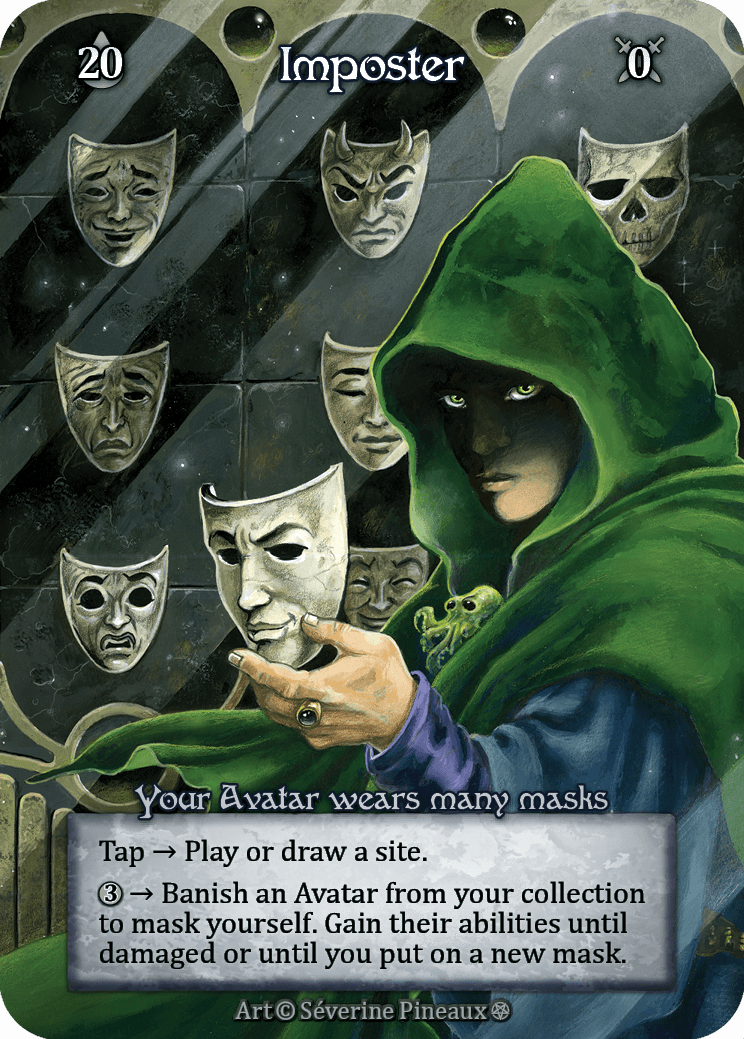
    Imposter is an Avatar that I was immediately enamoured with. It has flexibility and power, but is tempered by a meaningful drawback. Playing Imposter asks us to be mindful of our mask. Imposter is flexible, and can easily play any element combination.

    There are two main schools of Imposter. The first wants to set the pace of the game and be the aggressor. This way the opponent is too busy dealing with your threats and can’t commit resources to demasking you. This seems to be the more popular version of the deck, particularly with Earth-Fire and Fire-Air builds.

    The other school is the more defensive and controlling Imposter that plans to thwart the opponent’s aggression and then find opportune moments to pull ahead. This version needs a plan to overwhelm other controlling lists, such as Archimago, that excel in long games. This is the version of Imposter that I prefer and have tested and played throughout 2026.

    But of course, depending on draws and match-ups, games can ebb and flow and you have to identify on the fly whether you’re the aggressor or the defender given the situation. Mist has the flexibility to do well in either situation.

    My list began life as Mono-Water. This core of DNA is still evident in the strategy and my card selection. I had success early in the year with Mono-Water, but as the meta matured and players became more familiar with how to play against Imposter, I felt the need to bring in some of my favourite powerful Air cards, particularly Blink, Grapple Shot, and Whirling Blades.

    In Mist Imposter, there are multiple different ways to build it. You can lean more into Air, with more aggressive minions. Gyre Hippogriffs in particular are a nasty threat against rival Imposters. You could go heavier into water, and just have Grapple Shot and other one-pip cards. There are also builds that lean on Annual Fair and get to enjoy a bit of everything.

    Deck Strategy

    This is a deck that looks immediately recognisable when you click into it. There is Thin Ice and Coy Nixie for repeatable minion control. Water has plenty of powerful Uniques that have a strong and immediate impact.

    So what makes this deck special? For me, it’s the versatility. This is a list that can use cards both offensively and defensively, making the most of any board state. Scatter and Swap are great examples of this. They can keep you in the game by acting as minion removal, or they can win you the game by rearranging the pieces as you see fit. It is a deck that plays Cores and wants to see them in the opening hand, but will find uses for the mana late into the game.

    The deck is exciting to play and has fascinating decision points at every point through the game. As Battlemage, there are plenty of games where the board state feels hopeless. With Imposter, I feel there are always routes to win and chances to salvage a bad situation. This feeling of power and control is intoxicating, and being able to keep the opponent off-balance and second-guessing is a good place to be for competitive play.

    My Card Choices – Artifacts

    It makes sense to me to start with the artifacts as they demonstrate the unique way in which Imposter plays and the choices that go into building the list.

    I always played one or two Cores in my Imposter lists, and enjoyed the occasional busted game where you get it turn one. Then I saw this interview between Zuul and Golden Eagle, and I reevaluated this position.

    Zuul identified the power of a turn-one Core and the discrepancy in power that this creates. He went fully into this by playing all four Cores, Key to the City, and Four Waters of Paradise. He played in an event before the Courts were legal, so got to enjoy the last hurrah of this strategy. I was going into a tournament with Courts, so I could be easily punished if I went fully into this strategy.

    Four Waters is an easy cut as it doesn’t help with paying for masks. Consulting the hypergeometric calculator, four mana rocks seemed to be the sweet spot, with diminishing returns on the fifth, so I went down to four out of five ‘mana rocks’. I opted for Amethyst and Aquamarine for the threshold fixing. Aquamarine is particularly important in combination with the Ordinary Towers to get explosive turn two plays.

    There was a hard decision between Ruby and Onyx Core, as there are corner cases where the threshold fixing is relevant, especially with Mismanaged Mortuary in the mix. Ruby Core allows me the potential to steal the opponent’s Vile Imp with Deathspeaker, so it gets the nod over Onyx.

    Key to the City is probably the most important ‘core’. Its versatility as both a defensive and offensive play should not be ignored. Making you immune to damaging sites such as Vesuvius and Mobbed Court is significant in aggressive metas. But it also can be used to get your minions into defensive sites like Gnome Hollows and beat tricky Earth decks.

    Amulet of Niniane is my MVP out of this event. You can play it early against Air and Fire decks that want to use Magic Missiles to remove your mask. You can play it on your minions to protect them from Poison Nova and Infiltrate. But most importantly, and this was a meta call, it saves you from being blown up by Major Explosion and Craterize. It also means you are safe on Death’s Door from commonly played kill spells such as Zap, Heat Ray, and Snowball.

    Ring of Morrigan is in here, but I am tempted to replace it with a Torshammar Trinket. Ring is nice against Necromancer and other token strategies and the healing can be important. But Torshammar allows your minions to trade more effectively, which is often more significant in winning games versus Ring pings. Overall, I don’t think it’s as powerful as it was in the Beta-AL meta, but its ability to cheese wins means it still earns a spot for now.

    Imposter has the card advantage engines to get the most out of all this mana, and Dank Omphalos is a big one. Imposter is one of the big reasons that people are playing Garden of Eden, so you need to be wary of that, but this deck does have more answers than most to sites. Dank Omphalos is a card that single-handedly wins games for me.

    Auras

    Auras are extra important for Imposter because we have access to Enchantress. I have seen lists that lean heavily into this and plan to go Enchantress every game. For me, this is a potential that can be leveraged, and is powerful when it works, but isn’t something I’m aiming to do.

    Atlantean Fate is my pick for the most broken Unique in the game. It can kill multiple minions, deny artifacts, messes with threshold, turns off site abilities, and opens up body of water synergies. The fact that you can then turn it into a five-power minion is cracked.

    Acid Rain – I had a difficult time deciding between playing one or two copies. It’s one of those cards that you love seeing the first copy of, but the second copy has massive diminishing returns. I had some bad runs in testing where I drew the second copy too frequently so made the emotional decision to drop to one. Acid Rain lets you win the Water mirror by shutting off the opponent’s powerful sites, such as River Rapids and Thin Ice. It’s critical against Avatar of Air. It shuts off Courts. Also playing it early into the opponent’s void can stifle their ability to place important Genesis sites. This list has flexibility to relocate auras, so you can play Acid Rain aggressively and then reposition it later if required.

    The Black Plague is an aura that I’ve seen cut from similar lists. Compared to the Great Famine, hitting the weakest minion often makes it the inferior of the two. But this list has many tools to move the opponent’s minions and the aura itself. One recent game against a Geomancer, I was able to kill six of their minions with it, which is incredible value for a single card. Funnily enough, I lost that game because of Roots of Yggdrassil, but such is the power of the Norse apocalypse.

    For other considerations, I have tested Abundance in the past, and it’s a fun combo with Mother, Maiden, Crone to be able to dump huge amounts of mana into the card draw ability. Abundance becomes a five-power minion, but you have to be careful to not give the opponent mana if you attack with it. This is a fun combo that I’ve enjoyed in the past, but doesn’t make the cut for tournament play.

    Thunderstorm is a worthy consideration. It can kill multiple minions, facilitates aggressive draws, and is powerful against rival Imposters. But the four-mana slot in Mist is pretty contested.

    Honourable shoutout to The Great Drowning of Men. I’ve had so much fun playing this card out of Imposter. It doesn’t work with Enchantress, but when you’ve got big mana, you can do big-mana things.

    Minions

    Two-Cost Minions:

    First up, I want to talk about Winter Nymphs. This is a card that people seem to reluctantly include, but I think in this list absolutely deserves the full playset. If you’re not playing three, you haven’t lost to Saracen Raiders and Redcap Powries often enough.

    They are a great defensive play, and it’s easy enough to move them around to allow your minions to not get tapped down. As a Stealth Blocker, they are reliable and hard to remove in early turns, so if you need to throw away a minion to preserve your Pathfinder mask, they do it better than most.

    But they also have offensive flexibility. If you can get them to your opponent’s back line, then all their blockers come in tapped, giving you incredible tempo. Stealth can get you Death’s Door kills, especially in conjunction with Swap, and they allow me to remove Aino from my list. I’ve found Aino to be a bit awkward, so haven’t enjoyed playing them.

    Next, we have three different two-cost Unique minions. We have Highland Princess to fully utilise our suite of powerful artifacts. Pied Piper is good against Necromancer, which is this deck’s biggest weakness, so he earns his spot. Tom Thumb is one of my favourite cards out of AL. Having two-power is significant and he pulls his weight in the damage race. His one defence power is a liability if Druid is popular, so he’s better this year. You can feed him into the Black Plague. At two-cost, he can often attack and then be replayed as a blocker. He gets hit hard by the courts, but I’d rather run a second copy of Acid Rain before cutting Sir Tom Thumb.

    There are some good choices in the two-cost slot. Low-cost minions are important as you need early blockers for your Pathfinder mask. I have played a lot of Adept Illusionists, especially in Mono-Water, but often found them to be too slow. A lot of opponents will often overcommit into getting rid of them because they are such a nuisance, so this can buy you the time you need in a roundabout way.

    I have never been a Polar Explorers enjoyer, even in Mist Battlemage. I don’t like that Polar Explorers requires to you to stack your minions up and you can be punished for playing your minions to the wrong site in the early turns before the board has developed. Polar Explorers are good to get around defensive sites, so they’re a meta consideration, but they didn’t get the pick for this tournament.

    Highland Falconer is another possibility for this slot, but they conflict with Mock Court, and in a deck that’s already weak to Firebolts and Magic Missiles, I think they’re pretty weak. Whenever I play Highland Falconer, I will always draw their winged friend after my mulligan, so they can be a source of frustration.

    Three-Cost Minions:

    This section represents the meat and potatoes of the deck, but there is still opportunity for spicy picks and consideration. Lugbog Cat is the heart of this deck, being both an incredible attacker and defender depending on the state of the game. I’m always happy to see this card in my opening hand.

    Coy Nixie is the heart of the deck’s power, and really pushes Thin Ice over the edge into broken territory. This combination of two Exceptionals can really just blank big minion strategies. I have seen some people drop to two copies, especially in more aggressive builds, but for me, three is a must. Coy Nixie is a rare example of a card in Sorcery that gets better in multiples.

    Order of the Sacred Oak – I wish I could play another three copies of this card. Sinkhole ruins your day and is responsible for the majority of games that I lose. They are of course a great defensive minion, but the Ward allows you can overcommit to an aggressive strategy against decks that rely on Poison Nova. Ward also is powerful against Trinket into Grapple Shot plays so will often be our best defensive three drop.

    Fey Changeling is quite popular at the moment. It can be a huge tempo swing, particularly against cards like Gnarled Wendigo. In this Mist list, Fey Changeling overlaps a bit with Coy Nixie, so that’s why I ultimately went to a single copy in this list, but Fey Changeling can surprise with its versatility in solving problems for this deck.

    Blue Knight was a late addition to the deck once I was considering the impact that Court of Equity and Mobbed Court would have on this list. One Blue Knight replaces Sir Pelleas. Sir Pelleas was already on the decline in Gothic for me as he gets covered by opposing three-power Ward minions. A Lance token has a lot of versatility, and combos well with the other minions in this list. Lance is also powerful with Whirling Blades. In this list, I couldn’t find room for Torshammar Trinket, so the Blue Knights’ stock rises. You can also use Deathspeaker on a Blue Knight to drop a Lance Token on your side of the board.

    Four-Cost Minions:

    I’ll begin with Bane of Aventis as he is responsible for how warped our Atlas is. Getting to three Air threshold is a strain on this deck and its consistency. I’ve lost games because of a poorly placed Mountain Peak breaking up my body of water. But Bane of Aventis wins games you have no right to win. Atlantean Fate is my number-one pick for most game-swinging Unique, and BoA is number two. The fact that he’s a four-power as well is just icing on the cake.

    Failed Mutation is an absolute champion. The fact that it doesn’t die to Poison Nova is massive, so it combines well with the Order to form an aggressive frontline against Fire decks. Being a Monster is also a huge tick in its favour as it doesn’t get hit by Arjaro Exorcist. There’s a lot going for the Accomplished Mutation.

    Sacred Stag – my Gothic hot take is that Sacred Stag should either be an Earth-Water minion or a mono-Earth minion. Water got a plethora of strong Elites in the four and five drop slot, and Stag is easily the best of them. Hyperparasite might slightly beat it out if you have an Airborne-heavy meta or if you want to play Den of Evil.

    Abaddon Succubus – she can absolutely run away with some games, combining well with Coy Nixie, but also being able to clean up token minions effectively, undoing early damage from a Necromancer or Geomancer. But four mana is a pinch point in this deck, and I’ve struggled in games where I draw a clump of four drops. She is also one of our only demons, so if the opponent has been sitting on an Arjaro Exorcist, she can be an easy kill. For these reasons, I’m considering dropping her to zero or one copies, particularly if Mock Court successfully pushes out token strategies from the meta.

    Ruler of Thul – I said earlier that I wasn’t a fan of Polar Explorer. However, I am a massive fan of Ruler of Thul. He’s another game-warping card in that when you draw him, you can completely change tack. With Mock Court, I removed Plague of Frogs, but with 60-card Spellbooks, this combo almost never came up in a meaningful way. But even without the Plague, Ruler is still a staple. Charge is often way more important than Stealth as a kill spell, so he gets the nod over Aino in this category as well. His interaction with Pathfinder can also be useful and open up some interesting lines to shape the realm.

    Five-Mana Minions and Up:

    Daperyll Vampire – I am a Vampire enjoyer. They have won me so many games with Battlemage. However, I think in this current Gothic meta, they are often subpar. Five is a lot to spend on a minion without immediate impact and resilience. They will still elicit a groan from the opponent when you play them (instinctive fear of the Daperyll Vampire is embedded in Sorcery players’ DNA), but they often feel fragile and vulnerable for such a big mana investment. Vampires get the spot in Mist as Water sites give them protection from bury effects, meaning they’re more likely to survive the turn.

    Hounds of Ondaros – they overperformed for me in this tournament. Their stocks are always in flux depending on what the meta is, but they do well on either side of the Earth-Water debate, so they’re never fully out of the running. Their ability to counter Infiltrate can be critical, especially when there isn’t room for Watchtower in the Atlas.

    Archangel Raphael – this guy is Imposter’s best friend. This card is incredible and always overperforms for me. A Ward on your Avatar often wins games by itself. The number-one reason I’m playing Water-based Imposter.

    Lord of Lies – the nerf to his ability hit hard. He’s still good, just not insanely broken. With Coy Nixie and Swap, you can set up his ability effectively and get some big swings. With this nerf, it’s safe for Battlemage and Avatar of Earth to go back into the water, so it did need to happen for the viability of whole archetypes in the meta.

    The Green Knight – last but not least for minions, the Green Knight is another of the top reasons to play Water. He is incredible against many of the cards Imposter struggles against. One of my favourite interactions is using him to punish decks that rely on Torshammar Trinket, forcing two three-power minions to dive into him. He is a card that can win you the damage race and set up inevitable wins with his Deathrite ability, so his versatility is the capstone to the strength of this deck.

    Minion Considerations:

    In general after playing this list, the curve is a little wonky. There is too much at three and four, with a bit of a hole in the low end and top end. A lot of the power of the deck comes from being able to play two synergistic cards, but it is lacking in singularly powerful threats. I am missing Mester Stoor Worm in this role.

    Minions that you can play before you go into Pathfinder and are resilient blockers are vital for the success of this deck. If you get an uncontested run with Pathfinder, then your chances of winning dramatically increase. When considering the low end of this list, this has to be kept in mind. The strength of going pure Pathfinder over Imposter is that you don’t need to worry about that and can focus on a more impactful midgame. The power of Imposter does come at a deckbuilding price.

    I’ve cut a lot of the splashy Water Uniques that Gothic gave us. Aino feels unnecessary for me, as I mentioned when discussing Winter Nymph and Ruler of Thul. Mother, Maiden, Crone is fun but three power is too much of a liability. Lilith is the same. If you need her to hit and you miss, then that’s game over. Evil Twin, and Selfsame, is an interesting choice, but I think get pushed out by the Courts, but Evil Twin does have a lot of versatility and is decent against Gargantula and Charge minions, so could be a meta call.

    Sturmgeist is a card I wish I could make room for, but the threes are already too clumped. Lacuna Entity is a staple in mono-water, but becomes slightly redundant in Mist, but I might go back to one copy. Hyperparasite I think is underrated in general and is important if Airborne is popular in the meta.

    There are a lot of subtle tweaks that can be made to completely change how the deck feels, such as going slightly more into Air or even dropping the two and three Air threshold cards and going back closer to Mono-Water. If site control becomes too prevalent, then you can reduce the numbers of Coy Nixies and become more aggressive.

    Magic

    Blink – I love Blink. If my deck has Air, it starts with four Blink, four Grapple Shot and goes from there. Blink has so much versatility and opens up the Grid for you. It works well with Pathfinder. It gets you kills that you otherwise couldn’t. I would love a third copy in this list, but two performs well.

    Lightning Bolt / Magic Missiles / Pollimorph – I’m grouping these together as they are a package in my mind. In general, it bugs me to play singletons of non-Unique cards. In many card games it’s easier to look at similar cards and decide that one is the best choice. But Sorcery asks you to cover so many bases, that often it’s better to give yourself the opportunity to draw the exact right card. It’s also important to consider the impact of drawing a second copy of a card and the diminishing returns on it. If you already have one Magic Missiles in hand that isn’t helping, the worst card to draw is a second copy of it. Archimago does make it easier to run a spread as you can double dip later.

    Grapple Shot – I love this card. I’ve played so much Battlemage, that I probably overrate this card. What pushes it over the edge for me in this deck is that you can easily get to six-plus mana so you can play a four-power minion and Grapple in the same turn.

    Whirling Blades – early in the Gothic meta, I found I won every game where I drew Whirling Blades. I was testing Mono-Air Pathfinder and Earth-Air Battlemage alongside my Mono-Water Imposter. So when Mono-Water Imposter began running out of steam and feeling like it wasn’t quite cutting the mustard in the meta, I knew who to turn to. Minions in Gothic have more resilience in this meta so you’re more likely to start the turn with a minion on the board. There is a case to be made for three copies of Whirling Blades and two Grapple Shot, and a range of other combinations, so this comes down to personal preference.

    Swap – Swap is incredible. In Necromancer, Swap is always three copies. Without access to tokens, Swap is slightly less powerful, so I’ve gone down to two copies in this list, particularly since I’m also playing Scatter.

    Scatter – credit to Count Tolstoy for bringing this card to my attention earlier this year. Scatter is one of those cards that looks good on paper, but until you play it, it’s hard to evaluate just how good it is. Scatter punishes Avatars holding Artifacts, letting you steal Rings, Cores, and various other toys. It can separate blockers, giving you access to kills your opponent cannot play around. It’s fantastic with Auras, particularly Black Plague. The number-one reason I have two copies of Scatter is that in the Auckland meta, we have a fearsome Ironclad-Imposter enjoyer, who loves turtling on Gnome Hollows with a Golden Harp.

    https://youtube.com/shorts/UW2CHNyLUg8?si=MBpCWif6pozkzkuL

    Scatter lets you break up the combo and get a win by pushing the Avatar off Gnome Hollows and the Harp in the other direction so they are no longer nearby (as long as the Hollows isn’t on their back row).

    Four copies total between Swap and Scatter is a good number, and this could easily be three and one in either direction depending on what threats you need to counter.

    Mesmerism – I’ve stopped myself from typing ‘this is the best Unique in the game’ several times now. I already gave it to Atlantean Fate and Bane of Aventis, so I have to stick to that. Mesmerism is busted. Just make sure you have the four Water threshold before windmill-slamming this card. Getting two slices of this cake with Archimago is busted.

    Considerations:
    I’m already stretching the threshold requirements for Bane, so why no Browse? This is a personal preference. I chose to play Mono-Water Imposter to not get screwed on threshold, so it was a big risk going back to such heavy Air requirements. BoA can turn games around in a way that Browse cannot.

    Plague of Frogs got the cut with Mock Court in the list. Mono-Water relies heavily on Snowball, but this isn’t as necessary in Mist with access to Whirling Blades and Grapple Shot.

    Into the Abyss and Call of the Sea are good considerations, but one of the way I’ve lost with this list is by getting my body of water split up by unlucky Pathfinder hits. I would like one copy of Call of the Sea, but there’s already several cards fighting for that spot.

    You could alter this list to be heavier in favour of Water, in which case you can replace Riptide starts becoming more useful than Blink or running a combination thereof.

    Sites

    The biggest reason to play Mist Imposter are the powerful sites you get to play. In general, Water sites being resilient to bury effects is meaningful and gives your minions such resilience. Auckland Grand Contest was Earth-dominant, so I benefited greatly from this choice.

    3x Troll Bridge / 3x Thin Ice – these are absolute staples. Taxing your opponent for stepping on your sites is one thing, but when your sites become repeatable minion removal, it’s over the top. These six Exceptionals are the number one reason to be playing this archetype.

    2x Wuthering Heights / 2x River Rapids – these sites support the Troll Bridge and Thin Ice plan, but also give massive reach to your minions. If you’re worried about Angry Mob and Gargantula, you can use these sites to play your minions to your back row without a movement penalty. This also benefits Imposter as you can play minions defensively and then launch them forward into the attack. You can also play these sites up a row, which then lets you launch minions on top of your opponent’s Avatar, helping with the Interrogator plan.

    The Void – this site is a risk. It’s one of the worst sites to see in your opening hand when you need to hit threshold, but late game is the best site in the deck. Just be careful that you don’t give your opponent the chance to sit their Avatar here to turtle. Imposter has zero power, which means you might struggle to finish them on Door. Scatter helps remedy this, at least.

    3x Babbling Brook – a versatile role player. I enjoyed this site more when I had Overflow, but it still pulls its weight without it. You can use it to try and high roll an early Pathfinder mask if its in your opening hand. But it stays as it’s one of the best sites to flip off the top when you’re Pathfinder to help smooth out the midgame and when trying to win a damage race. Just make sure to use your minions before you tap Pathfinder in case you flip this over and watch out for popping your own Wards.

    1x each of Dark / Lone / Gothic Tower – I’ve seen lists with multiple copies of each. In this list, I like just the one copy of each for a pop of potential power. You could even drop a copy or two in favour of other utility air sites. In this Water-heavy list, they can be awkward and you might not have the threshold to take advantage of them in the early game, but you can high roll big plays by getting one of these in the midgame.

    3x Floodplain, 1x Deep Sea, 3x Mountain Peaks, 3x Lighthouse – these are for threshold requirements. I think the days of Root Spiders getting drowned solely by Floodplain are over, but with Waveshaper in the board, you do have some reach to dunk them. Floodplain can help fill in the gaps that disrupt your body of water, which is important if you want to use Avatar of Water or Waveshaper.

    Innsmouth Dock – this is a site that I often see cut from Mist lists, and I think that’s a huge mistake. The biggest strength of this card is that it works on your minions. If you play this forward, you can attack your opponent’s site and then pull your minions back on to the safety of a water site. It also provides crazy coverage for your Nixies and Succubus as you can tap to move them up, use their abilities, then pull them back into the safety of your back row.

    2x Mock Court – I was struggling against Water-Air Necromancer in the lead-up to the Grand Contest. Mock Court gives me some game against that deck, but more importantly Mock Court just being in the meta scared off some people from playing Necromancer entirely. Geomancer and Archi that play Foot Soldiers can give Imposters problems as well, so I think it’s worth having them in the list. The list plays no Ordinaries and there isn’t even that I would want to, so it’s completely free to run. This is a flex spot in the list, so you can replace them if there’s popular effects that you’re worried about.

    Considerations:

    Mirror Realm – Mirror Realm is at its best when you have Elites and Uniques that get way better in multiples. My favourite target for it is Island Leviathan, for example. Mirror Realm works well with the forced movement sites in this list, and is good with Thin Ice and Troll Bridge. Generally for me, the more demanding my threshold requirements are, the less relevant Mirror Realm is, as often you need different threshold rather than more of what you have in the realm. If I cut back on Air threshold in this list, then Mirror Realm becomes more of a consideration.

    Mismanaged Mortuary – it was a meta call that I didn’t play this site. I anticipated that I wouldn’t play against Archimago. There’s only a couple of Archie enjoyers in the New Zealand meta. Flamecaller is the bigger risk and the Mortuary hoses this deck, but again I used meta knowledge to guess that Flamecaller wouldn’t be an issue. Mortuary doesn’t stop Deathspeaker, but I wasn’t expecting any of them either. If you think Mortuary will be important for your event, then you do need to find room and tweak the deck accordingly as it does do a lot of work against these two Avatars.

    Air Utility Sites – to name a few, Watchtower, Perilous Bridge, Observatory, Fields of Phyxis, Ruins (for stealing the opponent’s Vile Imps) – Air has some incredible utility sites. The two Mock Court and three Towers can be replaced with any number of sites.

    Playing Against the Courts

    The Courts get constantly mentioned throughout this article as they are the newest thing to impact the meta. Overall, I like the influence the Courts have had in shifting the perceived value of a lot of different cards.

    For this list, Mock Court and Overflowing Court are a non-issue. Mobbed Court is the biggest threat, and Court of Equity can be a problem.

    Overflowing Court can potentially stall us, but I think that’s manageable. This list could itself play Overflowing Court, especially if Mobbed Court becomes an issue. The life loss from Mobbed Court can really stack up, and if they play it in conjunction with Vindictive Nation, then our Acid Rain and Atlantean Fate get hit twice.

    Court of Equity is manageable, but there is the potential it can destroy certain opening hands. I have cut a lot of the top end mana-expensive cards to mitigate this. I think in a lot of cases, this deck is fine playing a three-cost Core and can find an opportunity to do so when committing to a defensive game plan. If Court of Equity becomes a meta staple, then you can cut a Core or two. The strength of Water and Air is that it has incredible Exceptional minions, so the core of our strategy is unaffected. If the meta is heavy in both Mobbed Court and Equity, then that might force us to lean more into heavy Air or heavy Water, as we’ll either want to remove Highland Princess and Cores to be heavier Water or take out the top end Water Uniques and become a more aggressive Air build.

    Collection

    And after all that, we get to perhaps the most important part of playing Imposter, the Collection. Having access to 10 different Avatar abilities is a massive boon.

    Whilst 10 different Avatars is the default, it is totally feasible to play other Collection cards accessed via something like Toolbox. It does take a disciplined approach to cut some of the utility and corner case Avatars, but it is justifiable.

    It’s also important to consider Avatars with abilities that don’t have a tap cost. This allows us to chain multiple masks in a turn for some interesting plays. This a reason why it’s important to have access to a lot of mana, so we can unlock interesting combinations.

    I’ve ranked the 10 Avatars I’ve picked for this deck and ranked them by how important I view them.

    Essential:

    Pathfinder – this is the reason to play Imposter. In many ways, it’s almost too good. We get the card advantage of not having to draw sites into hand without the singleton Atlas penalty. The biggest learning curve with Imposter is knowing when to go Pathfinder. Generally, the earlier the better, but you want to time it to gain maximum value.

    Ironclad – Ironclad can win games you have no right to win. Some Imposters lean heavily into the turtle plan and play cards like Golden Harp. I am a big fan of Amulet of Niniane as it nullifies a huge chunk of cards that players rely on to close out the game.

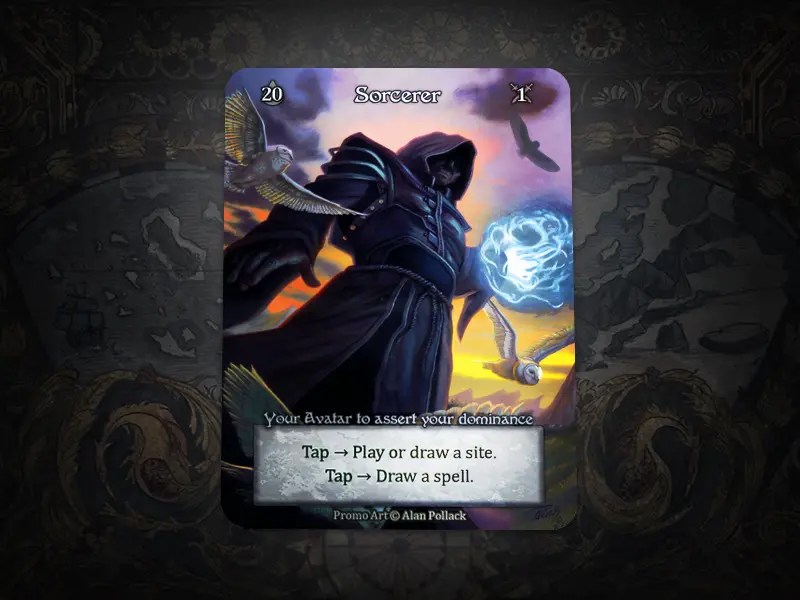
    Sorcerer – the games where you get three or more free sites via Pathfinder and then get to draw two cards a turn for the rest of the game are the ones you just win. There are also plenty of games where a single extra card draw is all that it takes, so it’s important to use the masks freely and get the same advantages where you can.

    Important:

    Archimago – Archie gets relegated to Important and not Essential in this list. With only 15 magic spells, there will be plenty of games where you don’t get the opportunity to use him. Most games, Archie just gives you a guaranteed win via replaying a Grapple Shot.

    Witch – I am a big fan of the Witch as she can influence the game like no other Avatar can. In a race, getting an additional two damage a turn can make all the difference. More importantly is the taxation ability. Being able to delay your opponent from dropping a Craterize can be the difference between winning and losing, and is usually telegraphed by how they draw sites and minions. Taxing them on the turn they want to play an Earthquake or Poison Nova is also another vital moment in the game. The Witch also being a counter to Battlemage and Avatar of Earth can also come up and is free with the first two abilities.

    Enchantress – the biggest benefit of Enchantress is that it counters opposing Enchantress. It is a headache learning all the rules interactions that it involves, but it’s definitely worthwhile to do so. Being able to use void spaces to banish auras is great. Or being able to drown the opponent’s auras with a Thin Ice is incredible, but it requires correct site placement of two-by-two Water sites underneath the oversized aura-minion. There’s only three Auras in my list, but I have won games solely off the back of combining Enchantress with Atlantean Fate or Black Plague. Plus having Enchantress in the Collection means we don’t have to play a Disenchant in the Spellbook.

    Useful:

    Avatar of Air – AoA gives you some movement utility and can puff your opponent’s minion on to a Thin Ice. It can be a bit tricky to fully utililse AoA as Pathfinder can make suboptimal site placements and then you also have to be on the correct site. Most often it’s used to reposition myself to either turtle with Ironclad or position a minion for a Grapple Shot. AoA comes up for me maybe once every five games, but when it does it feels significant to justify a Collection slot. If you want to play Mist Imposter and don’t have access to Avatar of Air, you can easily go without AoA.

    Deathspeaker – Deathspeaker is an Avatar that is on the bubble of being cut for me. I’m only running a few Genesis minions, so it comes up far less often than Archimago. It does allow you to access the opponent’s cemetary. If Henchmen inspires more Deathspeaker in the meta, then leaning into this mask and having more threshold coverage could be useful. Lance minions can be replayed with Deathspeaker to summon a Lance token, which is a neat trick.

    Waveshaper – in Mono-Water, this is such a crucial Avatar (Avatar of Water also did some fun work in that list). It helps you win minion matches and buy time to draw into a better answer. Waveshaper works well with Coy Nixie type effects and Innsmouth Dock to get multiple minions pinned down by the Waveshaper. The downside in this list is that you can easily have your body of water broken up by bad luck or an opponent’s Earthquake.

    Interrogator – Interrogator makes the Collection as I’m playing a lot of mana and I need all the card draw I can get. It is actually reasonably challenging to get this ability off. In the early game where you can sneak a minion through, often you’re not ready to move off Pathfinder. And in the midgame, a single trigger is often worse than just going either Witch or Sorcerer and getting exactly what you need. Generally, Interrogator comes up when I have a minion that can Door the opponent anyway, but I need card draw to increase my odds of winning the following turn.

    Other Choices:

    Geomancer – I like Geomancer in Imposter that’s playing Sinkhole. You can go Geomancer, pop Sinkhole, steal their site spot, and then Geomancer again the following turn to replace the Sinkhole rubble. I had considered it as a potential counter to Roots of Yggdrassil, but I don’t think it can actually salvage those games where you’re devastated by Roots. By the time you get back up to three mana to go Geomancer, they will likely have one minion to your zero and demask you anyway. If you fear Roots, Order of the Sacred Oak is your best bet.

    Realm-Eater – I enjoyed Realm-Eater earlier in the year, and it did some nasty stuff. It pairs well with Geomancer. Currently, if you lose your Realm-Eater mask as Imposter and have a site in your belly, you will be permanently Immobile with no way to remedy it. For this reason, Realm-Eater gets the cut, but the fact that Realm-Eater can eat a Gnome Hollows to potentially win the game is worth considering.

    Avatar of Water – I mentioned this in the Waveshaper section, but it is a consideration for this list. Being able to tap to cross the entire board can put you in a winning position. Pair this with an Ironclad to then turtle, or a Ring of Morrigan to spike the opponent. But in this current version, there’s too many opportunities for the body of water to be disrupted.

    Saviour – I’ve never liked Saviour in Imposter. It easily becomes too expensive, and in Mist there are too many evil minions for it to be reliable. I think for the mana investment and the situations it demands, it doesn’t quite earn a spot for me.

    Necromancer – I think there are better B and C plans for this deck than going Necromancer. It does help that the Skeleton can defend your Avatar, so it’s kind of self-sustaining whilst you do other things, but I can’t imagine the games where that’s a better defensive line than going into Waveshaper.

    Flamecaller – if you are playing Mismanaged Mortuary, you can play Flamecaller to ruin the day of anyone playing Fire. I think generally if you get a Mortuary against a Flamecaller, you’ve already won, but this is a beating.

    Other Builds

    This list popped up on Discord just before I went to post, and I think it’s a great example of how similar lists can be quite different. Congrats to Sedge for winning this Cornerstone with Mist Imposter.

    https://curiosa.io/decks/cmt6q0xf300wu04l8hqcwxa7r

    Sturmgeist is a great choice. I would be interested to hear how Assimilator Snail performed. That’s a card I haven’t tested much. With two Selfsame as well, there’s some good tech to use the opponent’s minions against them. I refuse to play Chaos Twister as I cannot trust my dexterity in a high-stress tournament, but it is a very powerful card. Bottomless Pit is a nice choice in the board, but I value it less because there is a very experienced Avatar of Air player in my meta, so the Pit is a liability for me. Overall, this list looks like a slightly more aggressive version of mine. So, great work, Sedge.

    In Conclusion

    I hope this primer will be useful for anyone considering Mist Imposter. This deck might look obvious on initial glance, but there are so many small decisions that all accumulate and determine the final list.

    My biggest piece of advice for playing Imposter is to practice. Its main strength is being incredibly flexible, but you need to internalise your options so you don’t run out of time in your round or miss a line.

    If I was going to Avatar of the Realm or another Grand Contest this year, I would likely play this deck. Imposter has been a massive part of my 2026 Gothic experience, so it joins the immortal ranks of my previous champions Elementalist and Battlemage. I will try new Avatars for the rest of the year now that my tournament season has ended. With Frostmage vs Lavamancer, I am liking the looks of Frostmage. It looks like it can play a tricky and aggressive game, similar to Mist Imposter. Frostbolt gives incredible power to Mist Battlemage, so I definitely want to give that a go. With 69 total new cards in the set, who knows what will stand out?
  • Brewers’ Almanac: Magician

    Brewers’ Almanac: Magician

    6 February 2026

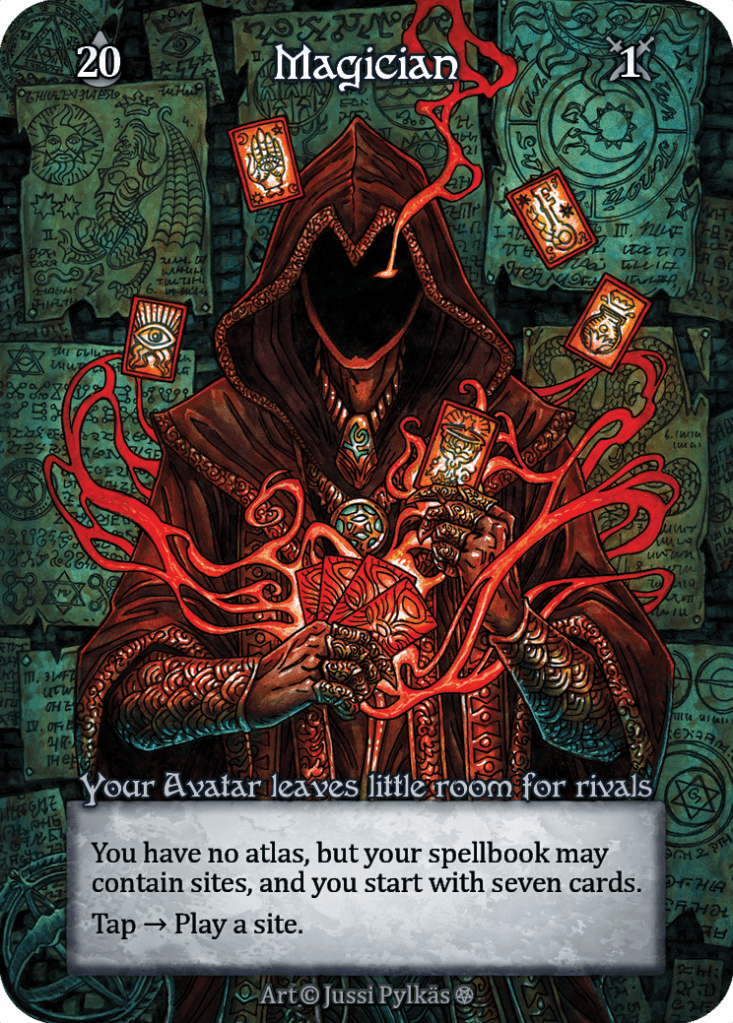
    Welcome to the Brewers’ Almanac, a series where I share my deckbuilding process. That process is a lot of overthinking, going around in circles, and trying to justify subpar choices. But I derive great joy from that, so I’d like to share it with you to help inspire your own brews. We’re starting off with a new Avatar from Gothic – the Magician.

    We’ve had a while to sink our teeth into Gothic and get a feel for the set and the evolving meta. Players are settling into the decks they enjoy and getting reps with their competitive lists. I have a big tournament in a couple of weeks, and season 10 of the Online Sorcery League is in full swing, so I should be practising and playing my tournament deck. But instead of doing that, I’ve been brewing jank.

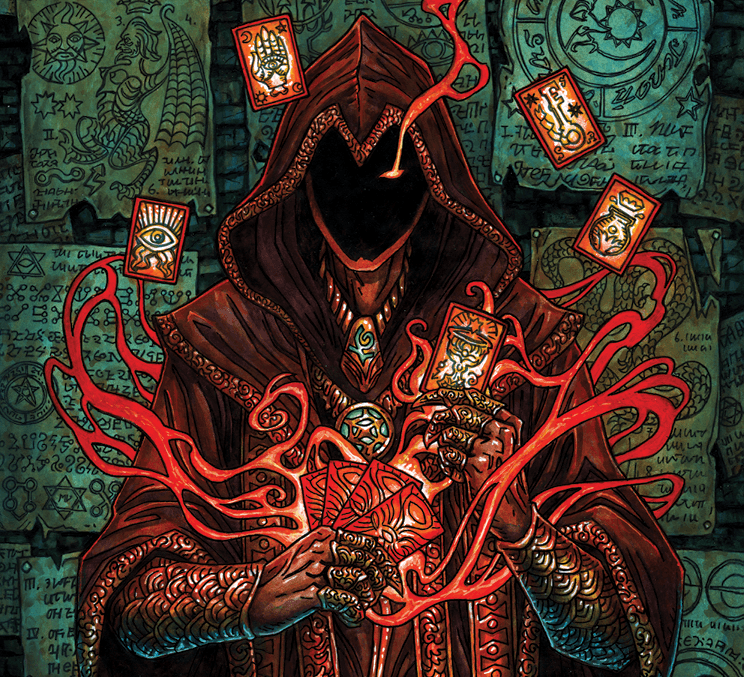
    Magician has captured the hearts and minds of Sorcery players. This Avatar is one of the best cards to come out of Erik’s Curiosa. It’s a cheeky joke at the competition, a reminder of good times with a game that means so much to a lot of us, and features one of the most stunning pieces of art in the game. So, let’s brew up some Magician.

    This article will be an insight into my thought process as I build decks. I’ve structured it to read more as a stream of consciousness piece, reflecting how my instincts and evaluations of cards and strategies evolve as the pieces come together.

    Generally, I am a vibes-based deckbuilder, but it is good to crunch the numbers and see how the math is looking. For my calculations, I use this website: https://aetherhub.com/apps/hypergeometric

    Inspiration

    Despite the very real possibility that Magician is the wrong choice for any deck and archetype trying to wield it, the community has embraced the challenge and is having a lot of fun brewing Magician decks.

    Have a look through Curiosa to see the diversity and creativity on display. There’s some great Primers exploring this topic, so thank you to anyone taking the time to write one up.

    The two biggest sources of inspiration for this brew are The Assorted Animals and Tabletop Royale YouTube channels.

    The Assorted Animals Youtube channel has featured a Chaoswish Magician a couple of times. Their list can be found here: https://curiosa.io/decks/cmix5za5n07m902fn4fw59mg4

    And Tabletop Royale featured a Voidwalk Magician: https://curiosa.io/decks/cmjhd70e98aj71afqkg1zaxgx?tab=view

    I highly recommend subscribing to both of these channels for their excellent gameplay and discussion. I particularly enjoy Tabletop Royale’s Card Game Necromancy series where they dig up games from the past. If you enjoy Sorcery, you’ll likely enjoy checking out that nostalgic series.

    These videos and lists were the initial source of inspiration for my Magician journey, so I recommend having these lists open in other tabs whilst you read the article for reference.

    Starting Point

    Let’s rewind the clock a month to when I first started brewing Magician. There are many fun ways to take Magician, but the standout directions were Air for its plethora of Voidwalk minions to utilise the powerful new artifact Ether Core. Water is also a good source of Voidwalk minions, and the combination of Water and Air gives us the Chaoswish combo.

    With Magician, there’s a lot of unique problems to solve. I’ll go over these points in more detail below, but Magician allows us to break the rules of deckbuilding in Sorcery and get a powerful opening hand. However, in playing this Avatar, we open ourselves up to some serious problems and opportunities to shoot ourselves in the foot.

    On Voidwalk

    The Voidwalk mechanic got expanded with Gothic with a bunch of powerful cards and new minions to help us reach a critical mass to properly exploit the mechanic. The strength of Voidwalk minions is that they can be deployed independently of your sites, allowing flexibility in both offense and defense. It can also be considered an evasion mechanic as you can retreat your minions back into the void. Ether Core is the most powerful addition to the archetype, giving us a strong payoff in the most explosive source of mana in the game.

    On Chaoswish

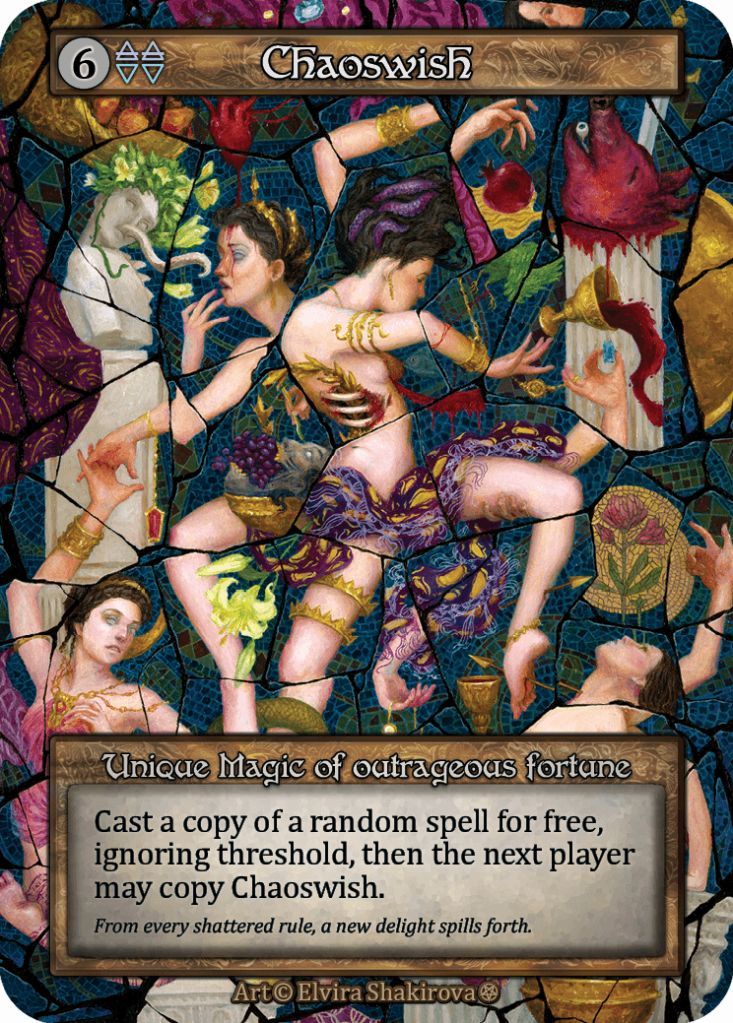
    Chaoswish is a fun card that allows players to roll the dice and potentially hit big. I mean, just go the Curiosa page and have fun hitting the random button a couple of times: https://curiosa.io/cards/chaoswish

    But of course, instead of being a fun card for good times, players instantly found the degenerate combo and began exploiting it. Using Kythera Mechanism to determine the random outcome of Chaoswish to chain additional Chaoswishes, Ring of Morrigan then turns those casts into damage. You can then use your final Chaoswish to cast Courtesan Thais or something equally poor for the opponent to close out the game. This three-card combo does require three different Unique cards, so it’s quite the task to assemble them, but the potential to win out of nowhere is very powerful.

    Don’t forget that you need to be nearby the opponent’s Avatar for this combo, so you either need to spend turns positioning your Avatar or use a movement spell, such as Blink.

    Chaoswish and Void Together

    So, why am I talking about combining two very different strategies in a single deck? I enjoy playing decks that have a consistent A plan, such as beating down with minions, combined with a ‘secret weapon’ B plan that can snatch victory. The more overlap between the A and B plans, the better.

    Ether Core is one such overlap card. It rewards us for having Voidwalk minions and then gives us the mana required to deploy the Chaoswish combo. As we often want to play out all three cards of our combo in a single turn to protect our artifacts from being destroyed or stolen, we need to be able to get up to eight or 10 mana. Chaoswish costs six by itself, Ring and Kythera Mechanism are one each, and then a Blink adds two. Ether Core goes a long way for that.

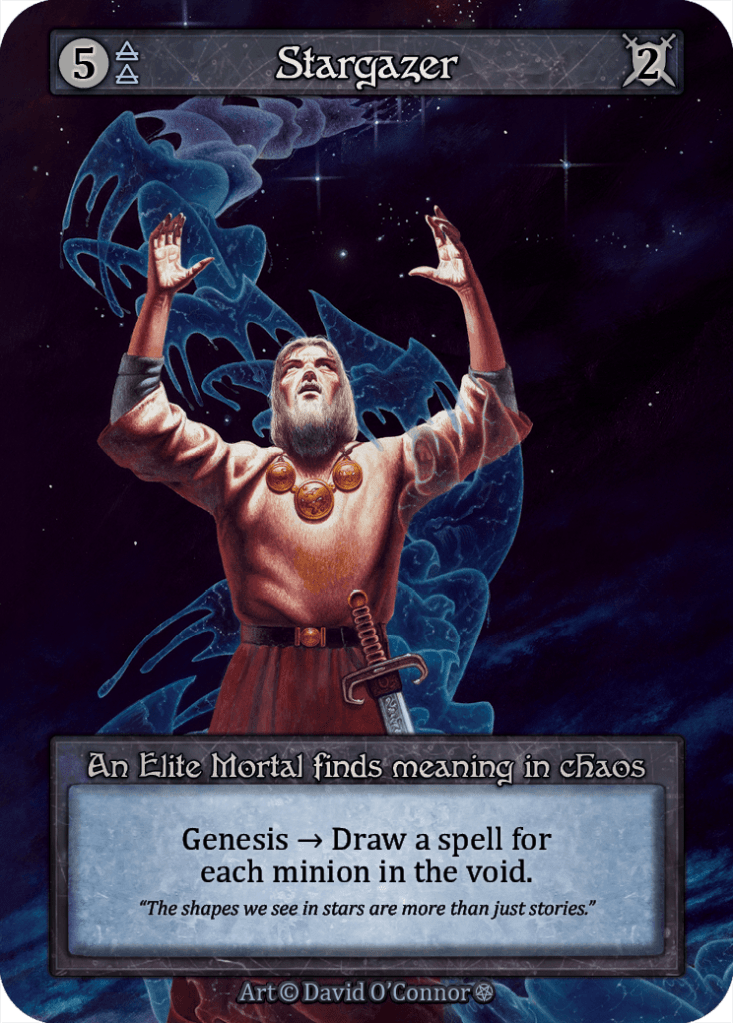
    The second card that overlaps these two strategies is Stargazer.

    It’s easiest to compare this card to Grandmaster Wizard. Stargazer is cheaper, has two more power, but requires Voidwalk minions to draw cards. The difference between five and six mana doesn’t seem like much, but in practice is significant.

    Stargazer ties these two strategies together. Voidwalk minions buy us time, they distract the opponent and keep the action on the opponent’s side of the grid, and they might even win the game by themselves. Stargazer allows us to either draw into our combo or provide the fuel to push our minion-based win condition.

    Lucid Dreamers is a fun pairing with Stargazer, allowing us to cast the Stargazers into the void to net an additional card for themselves.

    So… Why Magician?

    So, we have our strategy and key cards. Why put Magician at the helm?A perfectly valid answer is because it’s cool and we want to play it. But we have to compare Magician against other Avatars, such as card advantage engines Sorcerer, Deathspeaker, and Archimago. Harbinger also does the Voidwalk strategy effectively, utilising its mana reduction ability to play out minions aggressively. Magician gets a unique opening hand, but so does Spellslinger, so we have to consider it as well.

    Sorcerer can turn early game mana advantage into late-game card advantage by drawing two spells a turn. Deathspeaker and Archimago let us replay our important cards but require completely different builds. Any time I see a list with Grandmaster Wizard, I have to consider Deathspeaker.

    Magician locks in its advantage during deckbuilding. During gameplay, it is at the mercy of luck and is even unable to tap to draw sites to help mitigate back luck. As the game goes longer, Magician’s inherent card advantage will erode away and it will likely fall behind other Avatars.

    Magician gets a seven-card opening hand, like Spellslinger, but we can affect the expected composition of that hand in deckbuilding. To set it apart from Spellslinger, we want to be pushing towards one of two extremities – an opening hand of five or more spells, or one with four or more sites.

    On a quick tangent, I’ve tinkered around with a site-heavy Magician that wants four or more sites in the opening hand, but I feel like there isn’t quite enough power to achieve this currently. Magician also doesn’t get to benefit from the new ramp spells Landmass and Overflow as it doesn’t have an atlas to draw from. But a site-focused Magician is an interesting deckbuilding challenge. I would love to see your attempt at this challenge. Message me if you come up with something cool.

    Anyone who has ever said they want 40-20 is contractually obliged to only ever play Magician. The other benefit of Magician is by combining our atlas and spellbook, we effectively have a smaller spellbook. Our opening hand then comes entirely from this combined deck. This increases our chances of drawing into certain cards. We lose the ability to be selective with our draws, but have the potential of being much more explosive.

    This means that we can expect to see powerful Uniques more frequently than other Avatars. With our mulligan, we get to dig 10 cards into our combined deck rather than six into a spellbook.

    Another unique quirk of Magician is that gets to use Common Sense to tutor for Ordinary sites. Combos that require an ordinary site and a certain spell can be played effectively out of Magician – for example, Hamlet with Sylvan Splendour. In decks leaning into Chaoswish, having Common Sense to put together Fenvale Muse and an Ordinary River could provide immense value to then assemble the game-winning combo.

    Flood, Screw, and Rocks

    When it comes to evaluating Magician, it pays to use some Magic terms.

    The Magic term ‘mana rock’ means an artifact that can produce mana. In Sorcery, mana rock are cards like the four Cores, Shrine of the Dragonlord, and Philosopher’s Stone. For Magician, these allow us to ramp up our mana generation faster than sites would normally allow.

    Anyone who’s played Magic will have encountered mana screw and flood. Screw is drawing too few lands to execute your strategy, and flood is drawing too many lands so you can’t do anything meaningful. The Magician Avatar allows us to enjoy these extremes in Sorcery.

    The Plan

    So, what am I trying to achieve with this Magician deck? An optimal opening hand has sites, mana rocks, a couple of Voidwalk minions, and a wizard to refill the hand. Turn one, we can have lines like a Tower, Core, Forsaken. Turn two, Site, Phase Assassin. Turn three Mix Aer into a Grandmaster Wizard, attack for six. Vanishment and Fade allows us to keep chipping away at the opponent’s life without losing our minions.

    We want to leverage an explosive start and be looking to win as soon as possible. With an aggressive minion start, we can overwhelm the opponent with evasive and strong minions, or stumble into our combo and win the game.

    Like any good plan, there are multiple ways this can fail. With Magician, despite having a lot of redundancy – plenty of Voidwalk minions, lots of rocks, sites and spells that draw into more cards – we need these effects in the correct proportion. This deck can easily get into a position where it’s top-decking and fails to draw anything useful.

    The other thing to expect from Magician is that you will have turns where you can’t do anything with your Avatar. It’s important to include cards in deckbuilding to mitigate this.

    Board position is also critical to consider in our plan. So if you have nothing to do with your Magician, then you need to be considering a tap to move. We can preemptively position the Magician to then maximise the effectiveness of other cards, such as Disenchant and Poison Nova. This is particularly important for the Chaoswish Magician so that it can combo without requiring a movement spell.

    There are a couple of cards that let us tap our Avatar for value. Pnakotic Manuscript is good for this. Combined with scrying effects, such as Observatory and Cradle of Etherrum, this gives us the opportunity to tap to draw sites for zero life,… turning Magician into any other baseline Avatar. But Pnaktotic helps us bridge the gap, allowing us to have an explosive start and then turn into a Sorcerer clone to then push pressure on the board. At this point in the game, we probably don’t even want sites, so scrying effects to put sites on the bottom of the deck is preferable. Since we’re hidden behind defensive Air sites, we should have a healthy life total to exploit.

    Silver Bullet is also a good consideration. The tap cost can be prohibitive for other Avatars, but Silver Bullet gives us the exact card we need at any given moment.

    If all else fails, don’t forget that we can also block with our Avatar to protect our minions. If the opponent needs to attack two minions into your Headless Haunt to kill it, having an untapped Avatar to block the second hit can be a game-winning swing. I’ve found that often players will miss an untapped Avatar and its potential to block, so use this psychological trick to your advantage. How did I learn this trick? By making this exact blunder and not seeing my opponent’s untapped Avatar.

    How Many Sites?

    This is the most interesting question when it comes to building Magician. Ideally, we want as few sites as possible so we don’t get flooded in the late game, but enough that we don’t get screwed in the early game.

    In one build that I brought to a community evening, I was running 12 sites and 8 mana rocks. This is definitely greedy, but considering that the deck will lose games where it draws too many sites, perhaps this greed just front-loads the loss to occur in the first five turns rather than at turn 15. With 12 sites in the deck, the chance of seeing zero sites in our opening hand and mulligan is a miniscule 8.68%.

    Though, when those odds land, it feels bad. The first game in paper, I hit that 8.68% and failed to draw a site in my opening hand. Then to add insult to injury, I then didn’t see any sites in my first five draws, which is a 2.06% chance of happening. I felt bad for giving my opponent a non-game, but then we did have plenty of time in the round to have a couple of friendlies, so easily remedied.

    Looking at lists on Curiosa, no one else has been so greedy as to go as low as 12 sites, but I’m still not convinced that 12 is incorrect. In general, I see people often fielding 20 sites, which feels a bit much. If we’re getting ‘four spell, three site’ opening hands, we might as well be Spellslinger.

    But going from 12 sites to 15 halves our opening hand failure rate, so 15 sites has become my starting point for Magician lists, where you get explosive opening hands often enough with a more tolerable failure rate.

    On NPE – Negative Play Experience

    A successful game is one where your opponent wants to play again. Negative Play Experience, or NPE, is another concept I first saw discussed in Magic. There are strategies in Sorcery that I would describe as NPE, so it’s important to be aware of them and the effect they can have on our opponent. This is particularly important if you expect to play against new players or are trying to convince people to invest their time, money, and energy into Sorcery.

    Cards in Sorcery that seem to elicit the most negative emotions include theft effects such as Infiltrate, Betrayal, and Lilith. There is something demoralising about your opponent using your toys to beat you up. Site destruction can also be frustrating as it prevents you from even engaging with the game.

    In general, Sorcery does a good job of mitigating NPE. We have lots of tools to shore up our weaknesses to any given strategy, so if there is a particular card that riles you up, then it’s up to you to play the counters. I’m not saying that players shouldn’t play these cards, but just be aware of the impact they can have outside of the game.

    My main concern with Archimago last year was that it was NPE. Playing against Archimago, the games felt like a frustrating slog. If my minions ate a devastating Earthquake, that card was face up in the cemetery to wreck me a second time. Every time I played Archie, I didn’t even enjoy it. I don’t want my opponent demoralised and frustrated.

    Losing to a combo that you didn’t see coming or have any meaningful way to interact with is not fun. Any time I have won with Chaoswish, I didn’t even enjoy the win. For that reason, I have dropped Chaoswish Magician from my brewing, making mono-Air Voidwalk Magician the winner of this brewing session.

    My Magician Lists

    After a few weeks of refinement and testing, these are the lists I’ve settled on. The Chaoswish list probably needs some fine-tuning for its threshold requirements.

    Mono-Air Voidwalk aggro: https://curiosa.io/decks/cml8icpl800ei04l26pxm8iwn

    Air-Water Voidwalk Chaoswish:
    https://curiosa.io/decks/cml8rqr4400bp04l5m21608lt

    Other Magician Brews – Joy and Suffering

    Overall, I think what sets Magician apart is its ability to exploit single copies of a given Unique. If your strategy requires one particular card, then Magician is worth considering.

    Magician is a fun, explosive Avatar that can get some crazy high-roll games. There is a joy in sitting down to Sorcery, and shuffling up a singular deck. In many ways, Magician’s strength is that it provides an experience. It’s not about what mechanics the card unlocks, but the joy in our hearts that it awakens.

    Another brew I developed with Magician was a mono-Water deck looking to win with Putrid Presence. Aptly named ‘We Both Suffer’, I have yet to play it for fear of it being a slog for both myself and the opponent:

    https://curiosa.io/decks/cmiza9uez2lo11rfpoio9e8ph

    Conclusion

    Magician is the kind of card I love seeing in Sorcery. The fact that one card can open up so much discussion and possibility without warping or breaking the game is incredible. With 13 new Avatars in Gothic, I find it amusing that Magician is the one that’s taken up so much of my bandwidth.

    In terms of power, I don’t expect Magician to make waves in the meta, but I wouldn’t be surprised to see it win a tournament or two, piloted by someone who enjoys the vibes and challenge.

    If you enjoyed this style of article, then please let me know. What Avatar would you like me to feature in the next Brewers’ Almanac?

  • Gothic Cards Are Available on the Dust Store Right Now!

    Gothic Cards Are Available on the Dust Store Right Now!

    16 October 2025 Update

    Guess I was punished for that clickbait title.

    Waking up the following day to find all three non-foil sets and foil Fields of Phyxis sold out was a massive disappointment. Many people opted to not get these due to the high shipping costs and were hoping for a solution to this access issue. To see ‘sold out’ 24 hours after they dropped just puts everyone into FOMO mode. I expect all six items will be sold out soon enough.

    Yesterday, I made the decision to hold off on getting these sites because the shipping cost to my country was prohibitive. I would have loved to get the cards, but I figured I’d get them later, maybe when I had the dust to get one or two other items in the shipment. Now, do I pay the incredibly high shipping to just obtain two of the three foil sets that are still available, scrambling to get something rather than nothing? No, that’s even worse. The cost remains too high, and I won’t even get the site I was most excited to play with.

    My only hope is that these will return in a future store update and that this allocation was a super small ‘early access’ (maybe even with a dust cost premium). But for those attending SCGCon Las Vegas and need to factor the cards into their tournament, this is devastating, and I fully empathise with anyone feeling frustrated and angry about this situation.

    Ultimately, what I said about the cards in the article, what the promos represent for the game, and the excitement they generate is still all relevant (with an asterisk). I even wrote about the benefit they have on the game even if individuals can’t get them in hand, but that’s now a bittersweet silver lining that most people won’t see any merit in. 

    Any sort of FOMO, intentional or not, is disastrous. This will have a negative impact for any dust store updates in the future, creating a precedent that urgency is required. People will feel pressured to act with immediacy and be unable to fully consider the pros and cons of their purchase. Ultimately, in a FOMO environment, everyone loses. Those who do get the cards in hand are undermined by the negativity of those who missed out, and the legacy of the art gets overshadowed, becoming representative of a feel bad moment. If we go into the Gothic Dust Store refresh with FOMO being the expectation, then there will be more tears.

    I left yesterday’s article with a sentiment that this early access drop will encourage play, on a note of hope that these promos will entice attendance throughout the window before Gothic releases. This ‘sold out’ dashes that hope on the rocks. If anyone had acted yesterday and roused their friends to play on the weekend with the promise of earning some cool early access promos, then I have to imagine they’ve cancelled those plans now.

    15 October 2025

    Just when I thought I might get a reprieve from the Sorcery roller coaster that I’ve been on for the past week, Erik gives us an unexpected surprise. Three Exceptional sites from Gothic have been released on to the Dust Store and are available now. Read the official article here:

    https://sorcerytcg.com/news/early-access-gothic-cards-new-dust-rewards

    In this article, I will go over my thoughts on these cards, the impact they might have on the meta, and whether they’re worth spending your dust on.

    I wrote an article earlier in the year about the ways in which the Dust Store adds value to the game and allows for creative opportunities for the design team. I also went over my favourite cards that were added in the Arthurian Legends store update, so if you’ve got a difficult decision on how to spend your dust, this might be of some use.

    The Cards

    River of Blood – this card is a powerful hoser against life gain. It’s important to note that since the effect rounds down life gained, it’s especially effective against cards that gain odd amounts of life, reducing one to zero and three to one. The cards most impacted in the meta are Ring of Morrigan, Angel’s Egg, Holy Ground, Divine Healing, and Pillar of Zeiros.

    Fire-based aggro decks were already incredibly powerful, and this pushes their power even higher. I think Fire decks won’t struggle to find space for three of these sites, especially those that don’t need to run multitudes of Ordinary Deserts.

    Fields of Phyxis – where were you at Melbourne Crossroads? This card would have answered so many problems for me. It’s certainly finding a slot in my Water-Air Battlemage deck. I got wrecked by Troll Bridge at this event, so having some tech against that is more than welcome.

    Fields of Phyxis also helps with threshold needs by turning off the negative clauses that many multi-threshold sites have. Fields boosts the power of the Unique castles, such as Tintagel, and might even put some life into Avalon and Wedding Hall. Perhaps this is the time to try out some Knight builds. Could this one site save Templar?

    Haystack – this card is hilarious from a flavour perspective, but scary in application. It hits format staples like Common Sense and Highland Princess hard. It serves as a safety valve if search effects become too strong in Gothic, so I’m happy that we’re getting this card.

    I enjoy that it offers protection against Feast for Crows, and in a super niche way is great for beast tribal decks to thwart Kingswood Poachers from stealing all your pigs.

    The most powerful aspect of Haystack is that it’s not symmetrical. This means you can benefit from all the searching that you want whilst your opponent misses out. This is an interesting design choice as often effects like this would be symmetrical, as is the case with River of Blood.

    For the Collection

    ‘Collection’ I mean in two ways. Firstly, these sites are great for collectors looking to add some more bling to their binders. But more importantly, these sites are incredible additions for your Collection once Gothic releases. If you haven’t seen the news on this mechanic, read about it here:

    https://sorcerytcg.com/news/what-you-carry-with-you-a-first-look-at-the-collection-and-deck-sizes-in-gothic

    Ersatz Platz is going to be an important site in the game once Gothic releases. It’s an incredibly flexible card, offering threshold fixing and utility in one card. These three sites today are all excellent grabs for the Platz.

    But how do these Dust Store promos in particular facilitate the Collection? If you don’t normally play foils in your deck, you could form your collection with foil and promo versions of cards? This will help you differentiate cards that belong in your deck and in your collection and allow you to get extra mileage from your promos and foils. My suspicion is that Dispel was chosen as the Crossroads promo for just this reason. Now plenty of players have access to a special version that will be a frequent inclusion in Collections.

    As these sites come in three packs, it might be a fun idea to team up with two friends to each buy one pack of these sites and then divvy it up so everyone gets one copy. It’s quite possible that one will be sufficient for Collection purposes.

    Meta Impact

    So, these three sites turn off searching, life gain, and defensive sites. Hmm, which powerful meta deck ran all three of these things? Archimago. Is this an attempt to nerf Archie without any bans or errata?

    Even if people in your local meta don’t get these cards in hand before Gothic, the fact that they exist will affect beliefs and expectations and will have an impact on how people value certain cards and strategies.

    Maybe players will shift right off control strategies, and cards like Angel’s Egg will be seen as too much of a liability. Between River of Blood and Swap, is Ring of Morrigan sufficiently nerfed?

    I look forward to seeing how this plays out in upcoming tournaments. It’s possible that even in events where these cards aren’t legal, we will begin to see this shifts as people adapt to future changes. Or maybe we will see a surge of Archimago in the short term as people try and get their wins in with this Avatar before it becomes more difficult to do so. Maybe this will see a spike in people playing Archimago at the next two Crossroads event in an attempt to earn a Rainbow foil version before it becomes more difficult to do so?

    Design Considerations

    Nerfs and errata are a common tool for managing balance in games. It’s interesting that despite some vocal calls to ban cards such as Ring of Morrigan and the Archimago Avatar, Erik’s Curiosa have stuck to their guns and let these cards run their course. Is releasing these three sites an attempt to nerf these cards in an unique way? Will we see this method employed again in the future?

    I enjoy the possibilities that this creates. There is now a precedent that cards could be added to the Dust Store at any time. This means that going into a tournament, changes could be made without warning or with only a short time to adapt. We’ve already seen how impactful Swap has been on the meta for Crossroads Melbourne. Personally, I find this incredibly exciting, but I appreciate how this could be stressful for other players.

    Imagine if they released a Unique Minion in this way, some big swingy creature that adds spice to a certain archetype in an unexpected way. This also helps with the ‘one set per year’ design pace, as cards that might be deemed risky during the design and testing process can be pulled from a set and then released as a Dust Store surprise later on. I can just imagine something like the spoiled Asmodeus card literally exploding on to the scene halfway through Gothic’s lifespan, adding a powerful and format-warping Unique to the mix.

    The Art!

    These three cards have different art to their Gothic versions, so are a special treat for art lovers. It’s actually absurd how spoiled we are with art in this game.

    The regular versions of River of Blood and Fields of Phyxis have been spoiled already. There was some art spoiled in the Gothic trailer that could possibly belong to Haystack. And I’m torn between which version I like more!

    River of Blood by AronjaArt is beautiful, but after meeting Brian Smith in Melbourne, he’s skyrocketed up my leaderboard of personal favourite artists. So which version will I end up using in my decks? Maybe I’ll use one for the Collection and one for the main deck.

    The Cost…

    Dust is feeling more and more valuable as time goes on. There are more great things to get from the store, the price of booster boxes is trending upwards, and dust feels scarcer to find on the secondary market.

    200 dust for the non-foil set feels generous and priced appropriately, but 1200 for the foil set seems like a premium price, especially compared to the dust store Briar Patch set at 500. I think we will see that these sites are format staples and the higher price reflects this expectation.

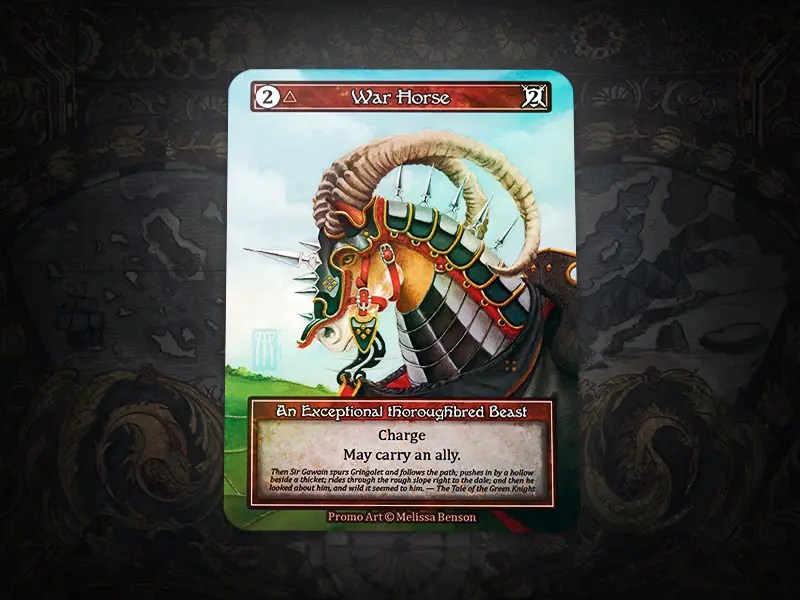
    The reality of dust is that tough choices have to be made. When everything was limit one, it was much more feasible to get everything. Now, I think a very small percentage of players will be able to afford everything they’d like to get. This does make for interesting decisions. I was so close to getting three War Horses recently, but today I’m glad I resisted the urge as I’d prefer these sites to the War Horses. But then that just makes me think maybe something I’d prefer more than these sites might pop up in the store. So, the downside is that players might be incentivised to sit on their dust, waiting for the perfect offering that might never come.

    The other issue is shipping costs. Currently, the price to get cards shipped to me is prohibitively high. Many people, myself included, waited and did a single big order to pick up cards from the recent Arthurian Legends update and aren’t in a position to afford another shipment. The early access benefit is hampered if you can’t get these cards in hand during the early access window before Gothic releases. With shipping time factored in, that window becomes even smaller. I’m sure I will likely get these cards in time, but the impetus to do so today is lessened by these factors. So whilst I’m positive about what these cards represent and how incredible they are, the reality is a bit less exciting.

    Better Start Saving! Better Start Playing!

    But this does serve as a poignant reminder that if you want dust store promos, then you need dust. And with seven and a half weeks until Gothic releases, there’s plenty of opportunities to play and earn dust.

    Before Gothic releases, by just playing in regular events, that’s up to 200 Dust for participation (100 capped per month). Every time you win an eight-person event, that’s another 200, and 100 for second place. If you can get a regular eight-person group to play once a week, over eight weeks, that’s 4000 Dust earned for the group between participation, first, and second-place prizing. It does add up pretty quick.

    In Conclusion

    Overall, these are fun cards that could make a splash in the lead up to Gothic. Anyone playing SCGCon Las Vegas needs to work these into their plans and build their decks and strategy accordingly.

    I have to imagine that these three sites will be format staples going forward, and even if you can’t get them during the early access window, will likely be solid picks throughout 2026.

    They serve as an exciting reminder of the impact the Collection will have on the game and how the game will evolve with Gothic.

    My advice is to play as much as you can. Earning dust is secondary to the enjoyment of playing this incredible game, but it is an incentive to get players to attend. Remind your community of how these points can stack up over time. If you’re playing regularly and having fun, the dust will accumulate, and those promos will eventually wind their way to your mailbox to end up in your favourite deck.

  • Baldassare’s Quest – A Sorcery Solo Mode Adventure

    Baldassare’s Quest – A Sorcery Solo Mode Adventure

    26 September 2025

    Baldassare’s Quest is an solo adventure for Sorcery: Contested Realm. It uses the rules and mechanics of Sorcery with a few twists. Can Captain Baldassare and his pirates conquer the Isle of Avalon and claim its treasures for themselves? This adventure can be played solo using the provided AI rules or against a human opponent piloting the Avalon deck.

    The scenario has a unique setup, special mechanics for playing and obtaining cards, and an AI rule set. I have tried to be as nuanced as possible with the rules, so the initial read might be daunting. I recommend setting up the game and playing along as you learn. With the core rules and objective in mind, the flavour and intent of the scenario should unfurl naturally.

    Note – this scenario is a work in progress and I would greatly appreciate any feedback to clarify and improve these rules. Sorcery is a complex game, and to get the AI functioning sensibly is quite the challenge.

    Disclaimer – this scenario is a fan project, using the rules and mechanics of Sorcery: Contested Realm, a game by Erik’s Curiosa. Thank you to the design team and all the artists whose hard work and creativity make this such an incredible game.

    This scenario can be played on Tabletop Simulator, which is available on Steam, but I highly encourage players to buy and play with the physical cards. I’ve prioritised cards from the recent set, Arthurian Legends, and given love to some underplayed cards from Beta. One of the goals in creating this scenario was seeing how I could showcase underplayed cards. It’s a testament to the creativity that underpins Sorcery that there were so many flavourful cards to use. Escyllion Cyclops is a great example of this. Because of its inherent drawback, it doesn’t get used too often, but it’s a powerful card in Limited formats and perfect for this scenario.

    Baldassare’s Quest Lore

    The infamous pirate captain Baldassare has heard rumours about the mythical Isle of Avalon and the treasures it holds. He’s already gained a foothold in Tintagel, capturing the castle and its surrounding holdings. However, the next part of his mission will not be so easy. He’s roused the ire of the champions of Avalon, who are preparing themselves to repel this invading force and drive them back into the sea from whence they came. Will Baldassare be able to triumph against these mighty figures of legend, such as Merlin and King Arthur?

    The very land itself rises up in defiance, and the Druids of Avalon work tirelessly to summon forth its ancient magic. Warriors and monsters have been drawn together in the defense of their homeland. Ever ready for a fight, the Knights of the Round Table have taken up arms to fulfil their oaths and claim glory and honour.

    As the old saying goes, the enemy of my enemy is my friend. Blunderbore, the ferocious giant has finished pillaging the Dome of Osiris, and armed with a treasure of great power, is spoiling for another fight. Will he help or hinder the cause of Avalon?

    However, weakness has settled in the heart of Camelot. Distracted by the quarreling between the Pagans and Christians, King Arthur has failed to defend his shores. Will the pleas of Avalon fall on deaf ears? Will the King remember his oath to the sacred isle and rally in time?

    But those are not your problems; you are the pirate captain Baldassare. You’re here to pillage and plunder these lands and claim its treasures and magic for yourself. Rally your Sea Raiders and prepare your weapons of war. It’s time for battle.

    How to Play

    The core rules and goal of this solo scenario is the same as a normal game of Sorcery with a few important rules twists and a different initial setup. You have to reduce the opponent to zero life from 20, and then deal a finishing blow while they’re at Death’s Door. You must achieve this without dying yourself. If the player is reduced to zero life and is dealt damage at Death’s Door, they lose the game.

    Assume normal rules for the game with the scenario rules taking priority. The Captain plays mostly the same as a regular game of Sorcery, but Avalon has a very different turn structure to create challenge and random outcomes against an AI opponent.

    Important Rule Changes:

    The Pirate Rule – after the Captain player casts any spells from the Avalon deck through the effect of either Captain Baldassare or Sea Raider, place the cast cards into the Captain’s cemetery instead of Avalon’s cemetery. Any remaining card(s) that the Captain does not cast from these effects go into Avalon’s cemetery. This is how the Captain player gains access to new cards and powerful spells.

    Refresh Rule – if either the Captain’s Spellbook or the Avalon Spellbook is empty and you need to draw a card, take the corresponding Cemetery, shuffle it facedown to reform the Spellbook. Neither the Captain or Avalon loses if their Spellbook is empty. If you’ve played a deckbuilding game like Dominion or Ascension, you will be familiar with this mechanic. The second time the Avalon Spellbook is emptied and reshuffled in this manner, Escalation occurs and all Avalon minions gain Movement +1.

    The Captain Rule – Captain Baldassare is not an Avatar or Minion in this scenario. Captain Baldassare is not an Avatar, so cannot tap to draw or play Sites. Captain Baldassare has three power, as printed. Captain Baldassare cannot be destroyed by card effects or damage. This rule is important for how the AI operates and evaluates the board. Captain Baldassare cannot be submerged, burrowed, or enter the void.

    Importantly, as the Captain is not an Avatar, he does not have Spellcaster. At setup, the Captain player has no Avatar and thus cannot cast cards without special casting conditions, such as stated on Grievous Insult. This is the first puzzle the player must overcome.

    Building the Deck

    The deck list for this scenario can be found here: https://curiosa.io/decks/cmfok2qeq006aih04skkw4a2p

    The deck list is structured in a way to facilitate being loaded into TTS and for ease of setup. There is a 59-card Avalon Spellbook, a 11-card Avalon Atlas, and a Pathfinder Avatar for Avalon to use. The ‘Sideboard’ comprises of both the 10-card Pirate starting deck and 19 setup cards. The scenario contains 100 total cards. Do not duplicate the cards in the Maybeboard. These 10 cards in the Maybeboard is the Captain’s starting deck to be taken from the Sideboard during setup.

    Tabletop Simulator Setup

    This scenario can be played using either physical cards or using the Sorcery module for Tabletop Simulator. I recommend building these decks and playing in real life, but for ease of testing, TTS is a useful tool.

    Making sure Thresholds are correct is critical for playing the scenario. Keep in mind the effects of Avalon and Bailey’s impact on Pristine Paradise.

    Tips for using TTS:

    Drag cards belonging to the Avalon AI into the hand of the second player at the top of the screen. This will switch control of the card. This allows you to use the threshold tracking and ‘start turn’ functions of the mod.

    Setting up the game in TTS:

    To create the game in TTS, go Create, Single Player, load Sorcery module in Workshop, Load. Then in the Sorcery module, Constructed.

    Load the Decklist in game using: https://curiosa.io/decks/cmfok2qeq006aih04skkw4a2p

    Move the 11-card Atlas and 59-card Spellbook to the opponent’s side of the board.

    Setup

    Take the cards from the Sideboard and place them on the board in the following positions under the control of the appropriate player.

    Avalon Player – 13 cards and the Pathfinder Avatar. All these cards come into play under the control of the Avalon player except for Ruby Core, which begins on the site and thus isn’t controlled by either player at the start of the game.

    Site 1 – Four cards: Camelot, King Arthur, Fine Courser, Four Waters of Paradise. King Arthur is carrying the Four Waters of Paradise. Fine Courser is carrying King Arthur.

    Site 3 – Two cards: Island Leviathan, Belfry.

    Site 5 – Three cards: Dome of Osiros, Blunderbore, Ruby Core. (Note Blunderbore does not start the game carrying the Ruby Core, and thus doesn’t provide mana and threshold for Avalon in the first turn of the game)

    Site 8 – Two cards: Avalon, Pathfinder. (Note you can use any Avatar card to represent the Avalon Avatar, but Pathfinder is the most appropriate to use as a rules reminder for how sites will be placed)

    Site 13 – Three cards: Merlin’s Tower, Merlin, Merlin’s Staff. Merlin is carrying Merlin’s Staff.

    Captain Player – 6 cards.

    Site 17 – One card: Autumn River. (This can be any of the ordinary River sites. Change the tone of the game by changing the season.)

    Site 18 – Two cards: Tintagal, Captain Baldassare.

    Site 19 – Two cards: Pristine Paradise, Bailey (note because of the Bailey, the Pristine Paradise won’t provide mana or threshold for the Captain player)

    Site 20 – One card: Hamlet.

    After setup, shuffle each of the three decks, Avalon Spellbook, Avalon Atlas, and Captain’s Spellbook.

    The Captain player draws three cards (from the Captain’s 10-card deck) to form their opening hand. The Captain player can mulligan up to three cards as per normal mulligan rules. The Avalon player does not draw cards from their Atlas during setup or at the start of their turn, so don’t draw a starting hand for the Avalon player. There should be zero sites in the Captain player’s Atlas. Captain Baldassare is not an Avatar, so cannot tap to draw or play Sites. The Captain player is always the first player and takes the first turn of the game.

    For the rest of the game, follow the normal turn order and structure as outlined in the Sorcery rulebook noting the exceptions below. There are special rules for how Avalon will draw and play cards from its Spellbook, and then AI rules on where it will place minions, how it will use the ‘Move and Attack’ action, and how it will use its minions to defend.

    Keep the Avalon Spellbook and Cemetery distinct from the Captain player’s Spellbook and Cemetery. When using the effect of Captain Baldassare or Sea Raider, make sure to refer to the Pirate Rule and place cards in the appropriate cemetery. The Captain wants to retain his loot.

    Captain Player’s Turn

    In the solo mode, the player will take control of the Captain deck, led by captain Baldassare.

    The Captain’s turn is identical to a normal turn of Sorcery. Follow the turn order outlined in the Sorcery rulebook. Once the player has access to a Spellcaster, they can play cards from their hand following normal mana and threshold rules. The Captain’s Atlas is empty at the start of the game. As the Captain is not an Avatar, he does not have the ability to tap to Draw or Play a Site.

    AI Turn, Glossary, and Notes

    Direction Rule. When AI minions need to Move and there is a choice of sites, if Avalon is on Death’s Door, go to the lower numbered site, otherwise go to the higher numbered site.

    Threshold. Tracking threshold is important. The game is designed to have roadblocks and randomisation created through both players’ access to threshold. Also once the Avalon AI has eight Water threshold, Island Leviathan will activate, so make sure to keep track of this carefully.

    Threatened Site. The Threatened Site is the singular Avalon site that contains the Captain’s minion(s) with the highest total power (including modifiers from abilities and artifacts). In a tie, the higher numbered site is considered the Threatened Site. The Dome of Osiros cannot be considered Threatened.

    Site Number. For example ‘Site 8’ refers to the site that’s in the grid space numbered 8 on an official Sorcery playmat. Sites go from one to 20. If there are conflicts between numbering orientation across various mats, refer to the Valley of Delight playmat.

    Forces Pile. A temporary zone used during the ‘Forces Gather’ step of the Avalon Main Phase.

    Captain / Pirate Deck / Invaders / Player – are all synonymous terms for ‘player one’, which will always be a human player. Consider these terms interchangeable to represent this faction. These terms might be used at different points in the document to mean the same thing for flavour reasons.

    Avalon / AI – are synonymous terms for the opponent in the solo mode, designed to be governed by the AI rules. These can be used interchangeably at times. The disparate setup of ‘Avalon’, ‘Camelot’, ‘Blunderbore’, AI, etc, as all components of the opponent.

    Avalon Turn

    In this section, the rules will be written from the perspective that the game is being played solo with the full set of AI rules in force. If there is a human player piloting the deck, then you can substitute choices such as Minion placement and activation with human agency. The turn structure and how Avalon plays cards from the Spellbook remains the same even with a human playing Avalon.

    Sorcery Rule Book: https://drive.google.com/file/d/1sgQo0xf0N2teIR0zlyl91g9j6LVncZnr/view

    The AI player takes their turn, following the turn sequence as outlined in the Sorcery Rule Book page 16, with Start, Main, and End Phases. The Start and End Phase function mostly the same, but the Avalon Main Phase has extensive changes to allow the AI and the scenario to function.

    Avalon Start Phase:

    Steps One, Two, Three as per normal. Skip Step Four of the Start Phase. The Avalon player never draws a card at the beginning of their turn. 

    Avalon Main Phase:

    Step One. Place a Site. Activate and tap the Avalon Avatar. The AI draws and places sites similar to how the Pathfinder Avatar functions with a few minor exceptions. The Avalon Avatar can replace Rubble sites. Tap the Avatar and reveal the top Site from the Atlas. Place this site in an adjacent empty (or Rubble) grid spot following these considerations –

    1. Ignore Site 16. (Avalon does not want to move next to the Captain’s stronghold)
    2. Move horizontally before vertically.
    3. If there is a tie between sites it can move to, prioritise the higher numbered site.
    4. If the Avatar cannot place a site following these rules as they are on Site 14, they teleport to Site 13 and attempt this once again.

    Essentially, the Grid is formed through the Avalon Avatar moving clockwise through the Realm. This creates opportunities for both players to attack and engage with each other. Avalon will play a site each turn until it runs out of Sites.

    On its first turn, Avalon’s Avatar will tap, reveal the top Site from its Atlas and play it to spot nine. This is because of the rules prioritising moving horizontally over vertically, and then since there is a tie between sites 7 and 9 on either side of it, it will go to the higher number, which is 9.

    If the Grid is full of Sites, excluding Site 16, or the Avalon Atlas is empty, the Avalon Avatar will move in the most direct route to a site where they have the most number of untapped minions nearby to it without being adjacent to the Captain’s minions. If there is a tie, it will move to be adjacent to their strongest untapped minion. This is where the Cruel Rule is important, if the AI has a choice, it won’t move to a location where it will be dead on board.

    Step Two. Forces Gather. This step is the most different to a normal game of Sorcery. In this step, the Avalon AI attempts to muster forces to protect itself from the invaders. The Forces Pile is a special zone to facilitate cards moving from the Spellbook to in play. Cards discarded from the Forces pile always go to the Avalon Cemetery.

    1. Draw five cards from the top of the Avalon Spellbook to the Forces Pile. If there are any cards in the AI Player’s hand, place all such cards into the Forces Pile.
    2. Reveal the Forces Pile. If there are no Minions in this pile, discard all the cards and return to Step 1.
    3. Calculate the threshold and mana the AI player has access to. (During the first turn of the game, the AI player does not generate mana or threshold from the Ruby Core as it’s not controlled by them at this stage as it’s not carried by their minion.)
    4. Discard all Minions in the Forces Pile that the AI player cannot play due to Mana and Threshold requirements exceeding the available Mana and/or threshold available to Avalon. Make an exception for any Minion that can be played to a Site with special rules such as Tournament Grounds.
    5. If there are no Minions in the Forces Pile at this point, stop, discard the Forces Pile and start again at Step 1.
    6. Discard all Magic and Aura spells. For each card discarded this way in this step, deal one damage to the Player’s minion with the lowest power. This can only affect one minion at maximum. Captain Baldassare is not considered a Minion.
    7. Choose the minion with the highest Mana Cost in the Forces Pile (if there is a tie, randomly select one) and play it to the Grid Square following the Minion Placement Rules below. Discard all other Minions and Automatons.
    8. Calculate the remaining mana available to the AI player. Discard all remaining cards in the Forces Pile that exceed this amount.
    9. Play an Artifact from the Forces Pile into the hands of the Avalon Minion with the highest power (even if it wasn’t played this turn).
    10. If there is still an Artifact in the Forces Pile, return to Step 8. 
    11. Surge! Mill cards from the top of the Avalon Spellbook until a Minion is revealed and place this in the Forces Pile. If the Avalon AI can play this Minion with their remaining Mana and available Threshold, play this minion following the Minion Placement Rules, otherwise discard it. The Avalon player will only Surge a maximum of once per turn.
    12. Proceed to the Step Three of the Main Phase, placing any remaining cards from the Forces Pile into the Avalon Cemetery.

    Minion Placement Rules

    These rules determine the priority of where the Avalon AI will summon minions to. The AI will never summon a minion to the subsurface (Burrowed or Submerged) or to the Void. Consider in order when casting a minion…

    1. If Avalon is on Death’s Door and there are no Minions in the same square as the Avatar, summon it to the Avatar’s Site.
    2. If Tournament Grounds is in play, any revealed Sirs, Knights, Dames are summoned here.
    3. If the Minion has the printed Submerge ability, play it to the surface of Site 3, which is the Island Leviathan at the start of the game. (If this Site is Rubble, the Minion cannot be summoned here)
    4. If there is an Avalon Site considered ‘Threatened’, and there are no other Avalon Minions there, summon it to that space. The Threatened Site is the Avalon site that contains the Captain’s minion with the highest power (including modifiers from abilities and artifacts).
    5. Site 8.

    Step Three. Avalon Minions Activate. 

    Start with the Avalon minion with the lowest printed cost. If there is a tie, start with the minion on the highest numbered Grid square. Repeat until all the Avalon minions have activated.

    1. The Minion will pick up any Artifact in their Grid square. For example, on the first turn, Blunderbore picks up the Ruby Core. (Optional Advanced Rule, if a Minion could Drop an artifact it is carrying that would result in a better outcome for Avalon, applying the Cruel Rule, then it does so)
    2. If the Minion has Summoning Sickness, end their activation and go to the next Avalon minion.
    3. Move and Attack, following the Minion Aggression Rules below. If a minion has no possible moves, go to the next Avalon Minion.
    4. Once all Avalon minions have activated, go to the End Phase.

    Note, in the early turns, Blunderbore and King Arthur are unable to do anything because they are disconnected from the rest of the realm. This is intentional.

    Escalation Rule:

    The second time the Avalon Spellbook is emptied and reshuffled, all Avalon minions gain Movement +1. This serves as a timer on the game and to prevent unintentional stalling tactics. Take this added movement into account when considering possible moves for the AI. At this point in the game, it should most likely result in ending the game for the player.

    Minion Aggression Rules.

    The forces of Avalon are trying to repel the invaders and ultimately defeat them. As such, they will prioritise killing nearby minions before moving to attack Sites. This is an area where the AI can be exploited the most and the player can prevail against the advantages that the AI player has. Follow the Cruel Rule here and skip any activation that is completely detrimental for the AI player. Note that Captain Baldassare isn’t considered a Minion for these calculations.

    Direction Rule – when minions Move and there is a choice of sites, if Avalon is on Death’s Door, go to the lower numbered site, otherwise the higher numbered site.

    When the Captain is on greater than zero life, follow these rules:

    1. If it’s possible that two Avalon minions could Move and Attack this turn to destroy a minion with greater power than both of the Avalon minions without interference, then Move and Attack that minion.
    2. If there is an adjacent enemy minion with lower power, Move and Attack that minion. If there is a tie, choose the Minion with higher casting cost.
    3. If there is an adjacent enemy minion with equal power, Move and Attack that minion. If there is a tie, choose the Minion with higher casting cost.
    4. If Avalon is on Death’s Door, Move to be able to Defend a Strike made against the Avatar. Calculate Belfry into this consideration.
    5. If an Avalon site is ‘Threatened’ and the minion has equal or greater attack than that minion, Move towards that minion. The Threatened Site is the Avalon site that contains the Captain’s minion with the highest power (including modifiers from abilities and artifacts).
    6. Move and Attack an adjacent Site controlled by the Captain, ignoring any site with Bailey. If there is a tie, consider the Direction Rule.
    7. Move towards the nearest site controlled by the Captain, ignoring any site with Bailey. If there is a tie, consider the Direction Rule.

    If the Captain is on Death’s Door, follow these rules. Apply the Cruel Rule where possible considering the Captain’s potential to block, but if it’s possible to exhaust defenders with a suicidal move for the AI to ultimately win, then its minions will make the attack.

    1. If adjacent to the Captain, Move and Attack Captain Baldassare.
    2. If the Captain is on Death’s Door, Avalon Minions gain: Tap, Destroy an adjacent Bailey.
    3. If it’s possible that two Avalon minions could Move and Attack this turn to destroy a minion with greater power than both of the Avalon minions, then Move and Attack that minion.
    4. If there is an adjacent enemy minion with lower power, Move and Attack that minion. If there is a tie, choose the Minion with higher casting cost.
    5. If there is an adjacent enemy minion with equal power, Move and Attack that minion. If there is a tie, choose the Minion with higher casting cost.
    6. If Avalon is on Death’s Door, Move to be able to Defend a Strike made against the Avatar. Calculate Belfry into this consideration.
    7. If an Avalon site is ‘Threatened’ and the minion has equal or greater attack than that minion, Move towards that minion. The Threatened Site is the Avalon site that contains the Captain’s minion with the highest power (including modifiers from abilities and artifacts).
    8. If the Minion can make an effective block on the following turn, they remain where they are.
    9. If the Minion could make an effective block on the following turn by moving nearby the Belfry, they take a step.
    10. If Avalon has more minions than the Captain, they Move towards Captain Baldassare if they are not adjacent to the Avatar.
    11. If Avalon has equal or less minions than the Captain, they Move towards the Avatar if not adjacent.

    Apply the Cruel Rule. The AI won’t move their minions needlessly or into harm’s way. If there are no logical moves, then it remains where it is.

    Minion Defensive Rules

    If the Captain attempts to attack an Avalon minion or Avatar and they have adjacent minions that can block, follow these rules. If there are multiple minions available to block, if it’s possible that they can kill the attacker, they will do so with fewest and least valuable combination of minions. If there is a tie of possibilities, use the minions with the lowest casting costs as a priority, and if there is still a tie, randomise it, ensuring the Avalon loses the least amount of resources.

    1. If the attacking Captain minion would reduce the Avalon life total to zero life or if Avalon is at Death’s Door, then the lowest casting cost nearby minion will block, even if it’s a chump block (it doesn’t kill the attacking minion).
    2. If the attacking Captain minion would kill an adjacent Avalon minion with a higher casting cost, then the lowest casting cost nearby minion will chump block the attack.

    End Phase:

    This follows the normal rules of the game. Make sure to activate Belfry at this point to ready nearby Avalon Minions. The intention of the Belfry is to allow mobility and defensive power of the Avalon forces.

    Play then returns to the Captain player, who has their turn, and so on. The game ends when one player is dealt damage whilst on Death’s Door.

    Two-Player Version

    This scenario was designed with AI rules baked into it, but could easily be played with either a human player controlling the AI to facilitate play for the Captain player, or with full human agency behind Avalon. The Avalon player will have quite an advantage in this case, so be prepared for this if you choose to play in this way. The Forces Gather step of the game is intended to provide some randomisation to mitigate this power imbalance and removing this step will likely break the scenario.

    Difficulty Modes

    These rules can be added to increase the difficulty of the scenario. As many can be applied as desired to increase the challenge of the game.

    1. Quick Giant Hands – Blunderbore begins the game carrying the Ruby Core.
    2. Poor King Arthur – Do not include Four Waters of Paradise during setup.
    3. Multiple Surges – add one or more additional Surge steps.
    4. Dangerous Isles – during setup, the Island Leviathan site begins the game in Site 16. Place a Rubble in Site 3.

    These difficulty modes were my favourite part of designing this scenario, and I would love to hear what you’ve come up with to spice up the design. There’s so much room for expansion here.

    Conclusion

    If you’re someone who enjoys reading rulebooks, thank you for making it this far. If you don’t like rulebooks, then you won’t likely read this sentence. Without the AI rules, this document would be a third of the size. I admit that this concept probably got away from me in the end, but I wanted to present this idea to start a conversation and hopefully inspire others to give it a go.

    The challenge of creating a solo mode for Sorcery is the complexity of the game. Adding a unique setup and a different turn structure was perhaps excessive, but it was my greatest opportunity for creativity in the scenario and the part I enjoyed designing the most. This is why I’m referring to this rule set as a scenario rather than a complete and all-encompassing ‘solo mode’. Some people may be disappointed that I didn’t just create a single-player version of the normal game. You could try to apply my AI rule set to a normal Sorcery setup, but I think that would just reveal more holes in my AI instead of creating a fun and rewarding game experience. For example, the Forces Gather step was an effort to reduce the number of AI decision trees and create some fun randomisation. One of my favourite moments in solo board games is when the AI gets their worst possible outcome and you get a free turn to exploit their bad luck.

    I will keep an eye on feedback over the weeks and continue to tweak the rules and improve the system, but I did rush slightly to get this article out as I need to move on to other things. There is an important Crossroads event on the horizon, and fingers crossed an entirely new set. I have enjoyed this ‘lull’ at the tail end of Arthurian Legends to explore and play around with some more esoteric concepts, but I’m super excited and looking forward to the discovery phase of Gothic.

    Ultimately, at the end of all this, I think Sorcery might not really function well as a solo game. Whenever I attempt to goldfish decks in testing, I find it wholly lacking. The joy of Sorcery is seeing what the opponent can do and in the back and forth that comes from that. Still, I encourage and look forward to seeing what other people come up with in regards to Solo and Single Player modes, and I’d greatly appreciate any feedback on my attempt.

    I’m also interested in what the Sorcery design team think about a solo mode, as it’s something the community has asked for quite often. There’s a board game that I’ve had my eye on for the longest time that’s proven to be difficult to get in my part of the world – Xia: Legends of a Drift System. The follow up game to that, Arydia: The Paths We Dare Tread, has a name attached to it that Sorcery players should recognise. Ira Fay is a genius when it comes to game design and solo mechanics, and with his involvement with Sorcery, I hope that we will see an official solo mode in time.

    My next article will be a design diary based on my thoughts and experience with designing this scenario. Ultimately, it was an exercise that I found challenging and rewarding. I found the cards and mechanics of Sorcery excellent for this purpose and gave me an appreciate for the little things that go into designing a game.

  • Part Four: My First Cornerstone

    Part Four: My First Cornerstone

    9 September 2025

    In part one of this series, I declared loyalty to the Battlemage Avatar and set myself some goals to spice up Cornerstone Season for myself. This kicked off in New Zealand with three events in the South Island of New Zealand, in Dunedin, Invercargill, and Christchurch. Unfortunately, I was unable to attend these events, but from what I’ve heard, all three were a lot of fun. This past weekend was my first opportunity to attend a Cornerstone, so I will go over my event and my thoughts on a couple of things in the world of Sorcery.

    Part one of the series can be found here:
    https://bardsword.com/2025/07/09/part-one-battlemage-is-my-cornerstone-champion/

    Achieving Goals

    So, a quick recap of my five goals and how I’m progressing with them.

    The first goal was to attend three events. I have one in the books and one planned for the 20th of September. The third is still up in the air. There are three more possibilities, but one’s in the South Island, and details for the other two Auckland events aren’t set in stone, so it would be pretty funny if I failed the easiest of the five goals.

    My second goal was to attend an event in the South Island. There is one more opportunity, but with the expense of air travel these days, it’s unlikely I’ll be able to. However, I have decided to attend Crossroads Melbourne in the West Island of New Zealand, so perhaps that counts.

    The third goal is to make the top cut / top eight of an event. Technically, I achieved this, but I’m going to roll this one forward to try and achieve it in a constructed event as well.

    My fourth goal is to win a Cornerstone event. Have I ticked this one off? Read on to find out.

    And finally, number five, the bonus goal, is to see a Rainbow Battlemage Avatar awarded. This is an interesting one. When I set this goal, I felt like Battlemage was a strong contender in the meta. However, with the recent rule change, I feel like Battlemage’s chances have dropped dramatically.

    In the next section, I will quickly go over how I feel the rules and meta shift has impacted Battlemage and how it affects my Cornerstone Season.

    A Grim Shift in the Meta

    All it took was one little rules change to change everything. Grim Guisarme, Mask of Mayhem, and Daperyll Vampire being able to benefit from striking sites has dramatically altered the meta. Now, it’s more dangerous than ever to leave minions on the board. If the opponent starts their turn with a five-power minion on the board, that can easily be doubled to 10 and doubled again to 20 with something like Grapple Shot for six. This insane burst potential means games can end quickly and from out of nowhere. This also means that four- and five-power minions are more significant.

    This is terrible news for Battlemage. Now Battlemage has to pack even more answers to big minions, whilst having their most precious resource, their life total, being even more critical. Even being at 16 opens the door to a sudden burst to zero.

    Earlier in the year, before the rules change, I was playing Grim Guisarme in Battlemage as an answer to Archimago’s life gain, but now that everyone is playing this tech, everyone is expecting it, and the element of surprise is gone. Battlemage’s unique burst damage is now available to everyone.

    So bigger minions, more burst damage, swingier games. It’s a tough field for Battlemage. What does this mean for my goals and decision to take Battlemage to Cornerstone and Crossroad events? Is Battlemage now just a terrible choice in this meta? Is it poor form to renege on my self-imposed challenge and switch to another Avatar?

    Dragonlord is Powerful and Fun

    With the release of Dragonlord, I’ve been distracted away from testing Battlemage and instead have been experimenting with various Dragonlord decks. Overall, these have been fun and powerful and offer some interesting builds.

    Dragonlord-Xeraphine has been my pet deck for the last few weeks, and it’s been a lot of fun. More concerning for my challenge is that it feels like a strong choice into the current meta. Being able to recur impactful minions like Morgana and the Green Knight means this deck can win the long back-and-forth minion-versus-removal match, whilst having game against fast decks that have lots of smaller minions.

    Overall, I will decide on whether to stick to Battlemage after the upcoming constructed Cornerstone event later in the month.

    Sealed Cornerstone Deck Build

    My first Cornerstone event was a sealed event, three packs of Beta and three of Arthurian Legends. Sealed is my favourite format, over draft and constructed, as the added randomness adds some spice to the mix. It also means I don’t have to endlessly test decks in preparation for the event. But this did unfortunately mean no chance to put Battlemage to the test at my first event of Cornerstone Season.

    Cracking packs to kick off an event is a great way to inject excitement into the room. And true to form, a foil Philosopher’s Stone was opened, sparking everyone’s excitement levels to 10.

    My sealed pool was an interesting one. I had great removal, a bloat of good minions in the three-drop slot, two bombs that pulled me in two completely different directions. Unfortunately, my piles were just a little bit light to go solidly into only two Elements, so my choice was to either go three colours or play some filler.

    Here is my pool and the deck I played with on the day. I would be interested to hear what other people would do with this pile. Ultimately, without big minions and powerful finishers, I would have to rely on speed. Two Sly Fox and a Pendragon Banner formed the core of my game plan.

    Build that I played: https://curiosa.io/decks/cmf9buai900g9jl04jodsqvc3

    Second possible build: https://curiosa.io/decks/cmf9chuat00iwjl04dtnon3l4

    This second list was what I initially built before I got nervous about missing thresholds and removing the Air splash. It increased my chances of hitting my three drops on curve, but took out some power.

    Second potential build: https://curiosa.io/decks/cmfacp6ys00k8l704jiyf0vxg

    This build is a totally different path that I only considered the day after the event. On the day, I dismissed Earth as it appeared shallow. I think I got a bit blindsided by Water due to the double Sly Fox and Lugbog Cat, but in a field with Ordinary Deserts and fewer Water sites, this might have been a mistake. Overall, I think the Ninth Legion is too difficult to cast to consider and my Air isn’t strong enough to justify it. Maybe the correct answer is Fire-Earth with just a light Air splash? But this is the fun of Sealed, and with a time limit, it can be hard to identify the best course in the moment. Much like in constructed, I do let myself get carried away by personal preference, and the Sly Fox duo was too much to ignore.

    Sealed Game Results

    There were four rounds on the day, and overall I felt confident with my deck. It was a decent pile with a plan.

    My first game was against Louis. Louis is a skilled player who I’ve faced in many final rounds of tournaments over the years. Getting this pairing in round one was an interesting way to start the day. At least I had all my brain power intact to throw at this game.

    This was a fun game with lots of back and forth plays. His Belmotte Longbowmen on turn three was countered by a Submerged Coral-Reef Kelpie to the site in front of it. This is the kind of three-dimensional play that I love about Sorcery.

    There were many interesting decisions, but my Firebreathing and Lava Flow got solid two-for-ones, swinging the game to my favour.

    My second game was against Grant. A while back in a draft event where first prize was an Alpha Binder, he beat me in the finals, so another formidable opponent. Unfortunately, Grant stumbled on threshold, and I was able to execute my Sly Fox Pendragon Banner plan successfully. Grant had fielded Sparkmage, an Avatar with an inbuilt counter to Sly Fox, so I got lucky to win this game.

    Third game was against Peter, a player who you might know from his YouTube channel: https://www.youtube.com/@feriomadrox
    Peter is a cunning opponent, who enjoys disruptive strategies and tricky plays with Avatar of Air in constructed.

    My brain power was flagging by this point. Sorcery events really take a toll. I had brought a chocolate bar for just this moment, but the sugar dumped fuel into my nervous system rather than into my brain. Adrenaline began to take over. Peter was playing a disruptive deck with cards like Bailey and Hamlet’s Ablaze, which could have really blown me out if I had played the three-element build.

    I managed to take the win through consistent minion pressure, meaning I was into the finals.

    The final round was against Andre, a newcomer to the Auckland scene. Andre was playing a superb Fire-Air deck with a solid curve and good top-end threats. The game devolved into minion-removal-minion-removal, dragging us into the late game, where my deck would eventually flounder. We both cast Firebreathing and Lava Flow to great effect, highlighting the power of these splashy Fire cards in this format.

    Eventually, the game got to double Death’s Door. I had a Sly Fox under his Spellslinger’s feet to threaten a finishing blow the next turn, but a Major Explosion got me first. So good game, and well done to Andre for taking the win.

    Cornerstone Results

    So, 3-1 made for second place. It’s always frustrating to get so close to the win, but such is the nature of games.

    I want to thank FTW Events for their successful Cornerstone Event. Their events are always a highlight for me and something I can mark on the calendar and look forward to. I was honoured to receive a Swap promo for my contributions to the Play It Forward programme – and for writing an article or two. If you are a new player in New Zealand interested in Sorcery, there are sets of Ordinaries available to kickstart your collection just for the price of postage. Send me a message and I can link you the Discord.

    Battlemage Update

    Following the Sealed event, there was Constructed. I begrudgingly took out Battlemage over Dragonlord. It’s time to start getting a bit more serious with my testing. I immediately sleeved up my Swap to take the new toy for a spin.

    My three games were against Enchantress, Avatar of Air, and Dragonlord-Ignis Rex. I got the 3-0, proving that Battlemage is an effective Avatar to play when you’re braindead from playing all day. I think this is the biggest reason for taking Battlemage to tournaments.

    A Legacy

    With each of my opponents on the day, you may have noticed a pattern. There is a rich history of competition between us. As time goes on in Sorcery, the memories and experiences weave into a rich tapestry. The ‘meta’ is so much more than just the decks people play; it’s the legacy and history formed over time.

    It’s also great seeing new players achieve success as it means they are more likely to come to future events, creating an environment where we can push each to greater heights and learn from each other, whilst forming friendships and in-game rivalries.

    Watch out, Australia

    Getting to Crossroads Melbourne was a bit of an ask this year, but after a lot of consideration, I decided that I will attend. It’s just too much fun.

    I had such a great time in Melbourne last year, attending two tournaments at Plenty of Games, so I am looking forward to returning. With PAX as well, it will be an incredible week – even if I go 0-2-drop with Battlemage.

    There is a massive group of New Zealanders heading over for the Crossroads in Melbourne, so it will be fun to see if we can get more Kiwis into the top eight than Aussies. It’s good that the All Blacks aren’t playing Australia the same weekend or this might spill over into an international incident.

    Gothic Release…?

    There are whispers in the darkness, a new shadow over the realm. Gothic is going to change everything. Is it possible that Crossroads Melbourne will be the final big event of Beta-Arthurian Legends? I have thoroughly enjoyed my time in the realm of Arthurian Legends, but I am so ready for Gothic.

    My pick for Gothic release date is still Halloween, October 31st, with an announcement six weeks before on the 19th of September (the most important day of the year).

    You can read some of my predictions about Gothic here:

    https://bardsword.com/2025/06/16/five-predictions-for-gothic/

    Conclusion

    My first event of Cornerstone Season is in the books. Event two is close, where I can finally put Battlemage to the test. Melbourne will be the highlight of my year, and then Gothic on the horizon. I’m having a lot of fun with Sorcery. I hear some talk about a lull? I don’t know what that is.

  • Some Context: My Game Journey from Magic, Board Games, to Sorcery

    Some Context: My Game Journey from Magic, Board Games, to Sorcery

    1/7/2025

    A Foil Bloodstained Mire

    Like so many, I grew up with Magic the Gathering. I was probably around 10 when I first played. It was at a school camp, and everyone was sharing their smuggled contraband. A pile of tatty cards featuring various monsters captured the attention of all the kids. At the time there was no way I could anticipate the impact that this game would have on my life. A friend graciously gifted me a pile of common goblin cards, and that became the seed of a 25-year-long collecting and gaming hobby.

    Urza’s Saga was on the shelves at the time, but we had our eyes on Craw Wurms and Shivan Dragons, so we spent our pocket money on bulk commons rather than ripping booster packs. Too bad I didn’t know about Tolarian Academy back then. But that era of pure innocence is irreplaceable. We played on pure joy and imagination.

    I would play Magic on and off throughout my childhood years, but I moved schools and lost touch with many friends. I played and collected Pokemon and Score’s Dragon Ball Z, instilling that sense of wanderlust that maybe the next best thing can be found in a completely new game instead of the tried and tested one. In the process of exploration, novelty was found, but at the cost of never quite being on the same page as everyone else. Not quite being in the right place at the right time became a frustrating theme.

    And then in 2002, the set called Onslaught drew me back in to Magic. I remember getting a tournament pack, and the excitement to be opening so many cards in one go was immense. The first card I saw beneath the cellophane was a foil Bloodstained Mire. How disappointing. A rubbish land, that costs life, and a waste of a foil as well. I think I sold it for about 40NZD soon after and was pretty happy with that at the time. Probably immediately grabbed another four or so booster packs. I sometimes look up and see how expensive that card is now, but ultimately that feeling is just part of the hobby. Sometimes regret can be a useful emotion in the collecting hobby, or maybe it just helps create a hoarding mentality…

    The Onslaught block was also the only Magic set that I have ever collected in its entirety, completing Onslaught, Legions, and Scourge, giving me an appreciation for the difficulty and cost of pursuing such endeavours. My greatest Magic the Gathering success was winning a Champions of Kamigawa prerelease on my 15th birthday. Meloku the Clouded Mirror was one hell of a card, and I had two in my sealed pool, so I think that win was more luck than skill. But when things align, it does create a sense of serendipity that is quite intoxicating.

    But the overall feeling that I learned about competition in Magic was that it wasn’t for me. I enjoyed the thrill of playing with actual stakes, with prizes and pride on the line, but it was all too often not enjoyable. I learned about zero-sum fun. This is the perception where there needs to be a loser for there to be a winner. This attitude extended to the other parts of the hobby, and trading often felt like a hustle rather than something mutually beneficial.

    The only trade I remember fondly through all of this was at a prerelease, probably around the Kamigawa block, where my goal was to trade for a Mirari’s Wake for a kitchen table deck. An older player had a foil copy that was well beyond the scope of what I had to offer, but he generously gave it to me seeing my enthusiasm for it. It’s a shame I don’t remember who that player was, but it left a permanent mark on me that sometimes the best trade deals are the ones where dollar amounts aren’t considered. I try and remember that lesson whenever possible.

    Eventually, I developed an all-consuming World of Warcraft addiction and there was no longer time for Magic.

    The Board Game Era

    During university, I stopped playing Magic altogether. Completing that Onslaught block set taught me the difficulty and cost of pursuing completionism, and now there was beer and World of Warcraft subscription time to buy. I did dabble in the Spoils card game and the World of Warcraft TCG, but was unable to afford to go beyond starter decks and a few boosters. Getting a taste of a fun new game and being unable to delve further in was more frustration than it was worth.

    Then I saw the Summoner Wars board game. I couldn’t believe that in a single product I was getting all the cards I needed to play, all at an affordable price. I quickly made my purchase and walked out of the store feeling like I had robbed the place. But the first taste is free for a reason.

    But my board game was missing a crucial ingredient – people to play it with. World of Warcraft had given me hours of entertainment, but it had withered away my social networks and social skills. I had spent years with faceless players, grinding away in a video game. Meeting and playing with new people was certainly too much for me at the time. Thus began convincing uninterested friends (the few real-life friends I still had from school) to play board games with me. If only Discord existed back then.

    Then came the Lord of the Rings Living Card Game by Fantasy Flight. This was a solo board game. Now I didn’t need to find an opponent, and I could dive in to the mechanics and adventure all by myself. Thus starting a long and expensive hobby of collecting and sourcing packs from around the world. If I’m honest, my favourite part about the LotR LCG wasn’t collecting or playing it; it was listening to a fan podcast, Cardboard of the Rings. The sense of being in a community, of listening to other people’s stories and experiences of the game. Year after year, I heard about all these incredible conventions held in the States. Later on as the internet and social media developed, terms emerged such as ‘parasocial relationship’ and ‘FOMO’ which may better describe the situation here.

    Over the years, I leaned heavily into collecting board games. I was the guy that rocked up to a social event with a bag full of games that no one really wanted to play, but if things got boring enough, then perhaps a board game would be acceptable. There were some incredible nights where a board game absolutely landed and left everyone wanting more, spurring me on to buy more and more. But more often than not, it didn’t last past the rules explanation before we decided to play a drinking game instead.

    But that’s the beauty of competition. It’s a shared desire to attend an event and participate in an activity. That’s the secret weapon of card games like Magic. That people converge in time and space to play together. People bring energy and a desire to share ideas, to put those ideas to the test. I was lost in the hypothetical without enough opportunity to channel that latent energy into something meaningful and useful.

    Ultimately, I feel that board games suffer from that failure of time and place. It often feels like no one is ever quite on the same page, even at a dedicated board game event. When sitting down with a group, there is disconnect right from ‘what game should we play?’ Then through a rules explanation, there is a further gulf created from the knowledge, skill and what people want to achieve from the game. Add a few cell phones, side conversations, rules questions, and drinks and… it often just doesn’t quite work. It’s the unsatisfying feeling of a buffet restaurant, of quantity over quality.

    By this time, I was longing to go back to Magic. The structured format of organised play has merit, especially for anxious and awkward young men like myself. Even if the vibe got a bit too cutthroat, at least everyone was on the same page.

    Netrunner: the Best Game Ever Made

    Then came Android: Netrunner. Netrunner was everything I wanted out of a game. It was competitive. It was deeply thematic. It was novel in its mechanics and gameplay. Then events started popping up, and I braced myself to dive back into ruthless competition, but, unexpectedly, it was different to Magic. Everyone was having fun.

    Netrunner did not have that savage competition, that zero-sum brutality. I realised that it was more about the shared story space that emerged between two humans and their piles of cards. The game invited you to understand your opponent, to see them as creative and cunning and capable. The game wasn’t played on the table. Heads were raised, we looked each other in the eye, and we asked each other questions – ‘Is that a Snare or an Agenda?’

    Perhaps because of this, perhaps because the genre and subject matter encouraged inclusivity and empathy, Netrunner seemed to attract the best players in the community. People were friendly, welcoming, and engaging. Competition could occur without negativity. Suddenly, it didn’t quite matter as much if you won or lost. There was something else being generated, something worth more than prize money and rare promo cards.

    Unfortunately during that time, I had a difficult work schedule, so I couldn’t play for weeks at a time, and then when I did have time, I was too tired to attend events. Combined with a format that changed constantly due to the monthly release model, I just couldn’t keep up. I regret not pushing myself to attend more events. When the Fantasy Flight run ended with Reign and Reverie, I was left wishing I had done more. I had found myself at the finish line with gas left in the tank.

    Chasing the Dragon

    I had experienced the best of what games could offer. I had also experienced many lows. There were some incredible moments, but there was much more discontent. I was now in my 30s and becoming disillusioned with the hobby. In many ways, games – the thought of games – became a coping mechanism, an addiction to get me through the long work days. Retail therapy.

    Instead of playing board games, I became a board game collector. I would dream up situations where a game would be the perfect activity for a particular situation with a particular group, and that would be enough to click buy. Receiving a package, unboxing it, putting it on a shelf… well, that was about as far as it got for 90% of my board games.

    In Magic, Commander, or EDH, was on the rise, seemingly offering the Holy Grail of gameplay. A chance to play with three friends, to utililse your entire collection, singleton, and actually have fun playing Magic. I poured money into Commander chasing that dragon, building decks and stockpiling singles.

    But Commander was a poisoned chalice. For many players, it was a platform to destroy and demoralise three people at a time. Bad-faith actors could never operate with more efficiency at a gaming table. I’ll reiterate that I’m not saying all Magic players are like this, but with four players, the odds are high that at least one person can spoil the experience for one reason or another. Commander is the worst of Magic combined with the worst of board games.

    By this point, I had tried everything. I was burnt out on board games and Magic. COVID had done its damage and changed the landscape of interacting with people and going to public spaces. At this point, I decided I was done with games and it was time to move on to something else.

    Ensorcelled

    And then I saw Sorcery advertised on Kickstarter, and I changed my mind.

    Well, no. The Kickstarter looked amazing, but I looked at my shelf of games, and closed the browser. I can’t do another trading card game.

    But it stuck in the back of my mind over the next few weeks.

    Throughout the pandemic, Team Covenant kept many of us sane by streaming various games on their Youtube channel. I enjoyed watching their content because of the friendship and comradery they showed. I sensed a genuine passion for games in the way they talked about the hobby and the wider industry. They certainly were putting in the hours during a time where most people opted to opt out.

    I had found their channel years before by searching for Netrunner content. They often talked about how they’d had a similar experience as I did with Netrunner, experiencing similar positivity, so I sensed that I was on a similar bandwidth as them when it came to gaming.

    So when Team Covenant began talking about Sorcery, I listened. Now I was ready to back the Kickstarter.

    What appealed to me the most about this fledgling project was that it wasn’t going to be a competitive game. It was a trading card game where I could set my pace. One set a year meant I could build decks and attend events at a nice relaxed pace. I didn’t need to put more money into it than I was comfortable with. Sorcery didn’t demand anything from me.

    With Alpha in hand, and Beta starting to hit the shelves, something happened that I did not intend. I started playing and enjoying Sorcery as a competitive game.

    Positive Feedback Loop

    As with most things, that shift from zero to competitive Sorcery player didn’t happen overnight. It was a series of small and vital steps. The first and most crucial step was that I met incredible people playing Sorcery. The game seemed to attract likeminded individuals that shared my frustrations of the wider hobby and had found a reignition of passion in Sorcery.

    I was still in a COVID mindset so there was some re-acclimatising that needed to happen to get back to being comfortable in public. Social anxiety had crept back in during the isolation, so it took some work to overcome that. Fortunately, I found a player interested in trying the game who lived out in the same rural area of Auckland as I did, so he graciously offered to pick me up on his way through to the store to play some games. It was only much later that he revealed how nervous he was that I might be a complete nutjob weirdo and was relieved that I was all right. So, shoutout to Rich, and thank you for taking that risk.

    Sorcery has a steep learning curve, so luckily everyone was on the same page in terms of game experience. It was an enjoyable time muddling through the rules, discussing scenarios, and talking strategy, all with an easy grace of likeminded and easygoing individuals. There was no ruthlessness, but competition was active and engaging. I wish there was some way to capture this experience and package it for new players. An issue currently is that new players find it challenging to learn the rules of a very complex game, whilst also dealing with the gulf of knowledge between them and enfranchised players. If anyone resonates with this point and is struggling, then please persevere. It is a challenge, but it’s worthwhile, and everyone will help you to the other side if you ask for help.

    During that initial league at Baydragon, I started meeting the people that would become the familiar faces of the Auckland scene. Community events hosted by FTW Events in Auckland gave this spark kindling, and I began feeling the call of the competitive spirit, encouraged by the positive feedback loop of great experience after great experience. Soon I found myself flying to Melbourne to play in my first ever international tournament.

    That event in Melbourne cemented Sorcery in my mind as something worthwhile, not just as a game, but as something that I can put my time and effort into. The energy at Plenty of Games was electric. Everyone was smiling, eager to share stories, show off their cards, and make trades (trades based on vibes and not online prices). The store itself is fantastic and well-equipped. The staff are all lovely. And there are actually plenty of clean bathrooms.

    At this tournament, I also somehow managed to make the top eight. I was having fun and doing well. Though, my standings were salvaged by the draft portion of the event more so than the prowess of my constructed list. I remember returning back late after lunch on the second day and missing the announcement of the top eight. I was informed that I had made the cut. I rocked up last as Jesse, the tournament organiser and community legend, was trying to herd players to take a photo, so he was surprised to see me holding out my hand for a Crown Sorcerer. To be fair, I was surprised too.

    There exists Youtube footage of me being crushed in my top-eight match. It was the first time I had properly played against Enchantress. I was exhausted and mentally drained. There were some boisterous Warhammer players nearby, so it was hard to focus. But still it was one of my favourite and most memorable games I had. My opponent was gracious, and Jesse was able to provide a level of clarity and expertise to the rules that made for a great learning experience. I played my Plague of Frogs into an on-board Wildfire, amongst many other obvious mistakes, and it was inevitable that I lost. But still, I left the event with something greater than any prize – a vigor to delve deeper into the hobby and give more of myself to the community.

    The Domino That Did Not Fall

    Over the following year, I played multiple times a week, attended more FTW community events, and even went back for another tournament in Melbourne. It was a whirlwind year, and I was cruising on a high of positive emotions. In that time, my collection goals ballooned, my spending increased massively, and going into Arthurian Legends was a feverish dream of ripping packs and going to every event on offer. 

    And despite all of that, it seemed that the set just didn’t quite land with the community. Attendance in Auckland quickly dwindled. People were disgruntled about various things. Players returned to Magic and other popular franchises such as One Piece. I think there are several reasons that could possibly explain this, such as economic downturn, a perceived barrier to entry to learn Sorcery, and a reluctance for players to embrace change – such as the increase in deck size.

    This is currently a challenging time for enfranchised players, but I think the tide is turning. There is a strong passionate core of players carrying the torch, new players are testing the waters, and Gothic has immense potential to reignite the wildfire. A firework in the sequence didn’t quite work with AL, but there’s still a whole display to detonate once the fuse is reignited.

    However, what the fanbase has done under its own steam is incredible. Every stumble is met with two hands held out in rescue. Things currently aren’t loud and flashy, but they’re there, and people are having fun. People genuinely love this game.

    Take a Look at Where We Are

    Sometimes it’s beneficial to take a step back and reflect properly. Climbing a mountain is more fun if you actually turn around and see the progress you’ve made.

    I hadn’t intended to write out this massive chunk of exposition, but I felt compelled to share, that it was important to set the stage for the blog and my writing. I expect my story isn’t unique. In fact, I think my story is very typical for Millennials. The threads of my story culminate into where I am currently and hopefully explain my thinking and position on many things.

    My story may sound gloomy and dismal, but there were many great times in the mix that I’m grateful for. However, the crushing industrial process of turning hobbies and nostalgia into a commercial product has left me pessimistic. That is why Sorcery is so refreshing to me. You can’t escape the realities of capitalism, but it’s nice when profit isn’t the number-one objective of a company. It has to be on the list somewhere, of course, but not being priority one makes a massive difference.

    Looking to the future, and Cornerstone and Crossroad events are on the horizon, and then Dragonlord and Gothic some time after that. There is a lot to be excited about.

  • The Dust Store is so much more than just a rewards programme.

    The Dust Store is so much more than just a rewards programme.

    With the Arthurian Legends refresh of the Dust Store, I have seen many people asking for advice on what they should spend their dust on. I’m here to make that decision even more complicated. In this blog, I’m going to list my favourite cards available through the Dust Store, both old and new, and explore the six ways that the Dust Store is much more than just a rewards programme.

    • The Dust Store is an opportunity to provide alternate art promos to entice collectors.
    • It rewards players for playing.
    • It allows for design innovation from the designers.
    • Provides practical solutions to enhance gameplay through accessories.
    • Celebrates artists.
    • Preserves the history of Sorcery.

    For each of these points, I have chosen one item from the Dust Store that exemplifies the point. My goal with this blog post is to generate excitement for the Dust Store and get more out of their rewards.

    I think it’s important to state how easily dust can accumulate through consistent participation over time to allay negative feelings. Between participating weekly, opening one or two booster boxes, and winning an event or two, it’s entirely feasible to earn 1500 dust in a year. So far, we haven’t seen the Dust Store go out of stock on anything, so there is time to earn and spend down the road. The marketplace aspect of the Dust Store promos is important but beyond the scope of this blog post. I’m just focusing on fun for now.

    The Dust Store is an opportunity to provide alternate art promos to entice collectors – Camelot (1500 Dust)

    Camelot is my favourite addition to the Dust Store. It’s the perfect encapsulation of what the store can offer. Collectors are rewarded by being given the opportunity to get these amazing alternate art cards. Whilst I’m certainly looking forward to playing with my Dust Store foils, I know most players are picking these up to add to their collections. The Dust Store does serve to provide that little bit extra value for people who are buying a lot of product.

    I love this alternate-art Camelot for many reasons. Firstly, Camelot, in my opinion, is a strong, fun, and powerful site. Currently, meeting threshold requirements is incredibly important due to having fewer proportionately sites that produce multiple threshold in a 30-card Atlas, powerful cards that attack sites directly, such as Hamlet’s Ablaze and Sinkhole, and the intense requirements of powerful cards such as Morgana le Fay. Due to this, I feel like we haven’t seen Camelot really hit its stride in the current meta, but I expect it to be a strong card into the future.

    The main reason I enjoy this card so much is that I’m a huge fan of Ian Miller’s artwork. This version offers a grim reinterpretation of the original version. 

    In the Jeff A. Menges piece, we see a resplendent Camelot, with triumphant knights returning home, banners waving in the breeze, and the castle gates wide open to welcome the heroes home. For me, this art depicts the height of King Arthur’s reign. However, in the Ian Miller artwork, I see Le Morte d’Arthur, the death of King Arthur.

    In the Ian Miller piece, the bridge from the shore to the castle has been severed, the gates are closed, and the angle looking up to the wall presents an insurmountable cold cliff. The transition of colour from the white castle walls to a lush green forest being drained of its colour, all shadowed by a dark sky and encroaching evil. This pieces says to me that the good times ushered in by the reign of King Arthur are over. This is the end of the Arthurian Legends.

    And we’re going into Gothic. Ian Miller is no doubt going to be featured heavily in the upcoming set of Gothic, so to me, this feels like a deliberate tie-in between two otherwise very disjointed sets. Arthurian Legends feels light, whimsical, and playful; whereas Gothic certainly won’t be. The Ian Miller Camelot is a perfect middle ground from where we are to where we’re going next.

    It rewards players for playing – Pudge Butcher (200 Dust per copy)

    Pudge Butcher might be the card that has hooked more new players into Sorcery than any other, so it’s always fun to see it being celebrated.

    The Pudge Butcher promo also showcases the benefit of the change from one copy per customer per lifetime to three, as players can now get a full playset of three copies of this Exceptional rarity card from the Dust store without having to go to the secondary market.

    Before this change, it was a mission to get a second and third copy, and players who achieved this often then kept them sealed, not quite making the leap to putting them into a deck. Now that everyone can get a playset, I expect this will open the floodgates to the idea of people using their Dust Store promos in decks instead of keeping them sealed in plastic or locked away in a binder.

    Pudge Butcher represents how the Dust Store rewards and celebrates players playing the game. Taking powerful constructed cards and giving them alternate art is a celebration of players. I hope to see other constructed staples get similar treatment in the future through the Dust Store, but I expect such cards are being saved for store promotions, such as the teased Apprentice Wizard and Grandmaster Wizard from Severine Pineaux.

    It allows for design innovation from the designers – Druid four pack (1000 Dust)

    The Druid Dust Store promo highlights how the store is a powerful tool to help the designers break out of the limitations and challenges imposed by the requirements of the printing process.

    The Druid as a double-sided card could have been handled in many different ways. I think the option of putting the foil Druid cards in booster packs as three or four separate cards would have had serious drawbacks.

    Firstly, combining the two Druids into one foil card would mean we’d lose the beautiful full-art back for two cards. And in my opinion, players opening the tokens would have caused more confusion and bad feelings than positive because of the connotation created by other card games that token cards are low value.

    This Dust Store package gives a feasible way to print all four in the way they deserve whilst preserving their perceived value. This shows how experimentation in design can be facilitated by the Dust Store, and I expect to see more of this in the future.

    Provides practical solutions to enhance gameplay through accessories – Soldier Tokens (200 for AL four pack, 400 for Alpha-Beta three pack)

    The tiny Foot Soldier tokens are a tidbit from the Kickstarter when the tokens were accidentally printed quarter size instead of half size. The fanbase loved this, and it was kept this way. 

    There are pros and cons to tokens at this size. An advantage is they help reduce clutter on the board and can be easier to handle in larger quantities. The downside is that they are easier to overlook and be obscured by other cards.

    For ease of game play, using full-sized Foot Soldiers tokens could be beneficial. I find often a Foot Soldier that comes down on turn one through an ordinary Village site can be easily overlooked and forgotten until it causes a critical error. They can easily be covered artifacts held by the avatar and minions played to the back row such as Highland Princess. Larger tokens helps prevent this issue by making the token have the same presence as other minions.

    The tokens help players customise their game experience and have options for how they want their game to look. I think there’s a lot of value in offering these options and provide players with personalisation options in the Dust Store.

    Celebrates artists – playmats, Watchtower, Roots of Yggdrasil, Mirror Realm, Primordial Spring (800 Dust each)

    Did you know that you can win the game before you start playing? If you put down a Roots of Yggdrasil playmat, the opponent will be so tilted by their strong emotional reaction to the power of this card, they’ll be unable to play at their best.

    I think the one thing players, collectors, and everyone involved in Sorcery universally agrees upon is that the artwork in the game is incredible and important. People are generous in giving their support and appreciation to the artists, and the Dust Store is another way in which this can be achieved.

    This is a bit of a cheat category as everything in the store proves this point, but I chose the playmats in particular to represent this. They showcase the passion and consideration that Erik’s Curiosa has for their artists in supporting them and championing their craft. The artwork comes to life at the larger size and small details can be noticed and appreciated at this scale.

    I would like to encourage players to embrace the half-sized mats and use them more often and bring them more often to events. I think it’s fun to sit down, place down your mat next to your opponent’s and share a moment to share and appreciate the art. It’s a great way to ease into a game and get into that positive mindset that makes for an enjoyable experience.

    Preserves the history of Sorcery – Sorcerer (300 Dust)

    The Dust Store can be used to preserve the history of the game. The Sorcerer is an iconic avatar, and this version gives a chance to preserve the Alan Pollack artwork that was previously only available through the Kickstarter and make it more accessible.

    I think perhaps the Sorcerer promo has been unfairly maligned, with players questioning why they would spend dust on yet another copy of the Sorcerer and that it might not be worth the dust, especially considering the availability of the box topper foil Sorcerers. I think this perceived negativity is perhaps the reason we did not see the previously spoiled Common Cottagers in this Dust Store update.

    It is unfortunate for something to be put on to the Dust Store and then rejected by the fanbase. Dust is a precious commodity, and players want to save their currency for when it really matters. I do hope that we see more items like the Sorcerer in the future, but perhaps we will see historical pieces like the Common Cottagers distributed in other ways. The Dust Store can’t quite resolve all issues, but it is still a powerful tool in the arsenal to help.

    I enjoy the Sorcerer promo and am grateful to have it in my collection. I think it gives an insight into the creative process that goes into the game, and that’s something I hold high value for.

    Concluding remarks:

    As I finish up writing this blog, I am eagerly awaiting my promos to arrive in the mail. I am definitely an overthinker and I enjoy musing about these things. As the store refreshed with the AL offerings, I acted a bit too quickly and missed getting Briar Patch because at the time I thought it was only one copy per 500 dust. Due to shipping to my part of the world being so expensive, I save up and do a single big order, so the Briar Patch will have to wait another year. Last year, I couldn’t afford Cloud City, so that was the first thing I put in my cart this time.

    Thinking about that Cloud City promo was a bit of a past-time over the last year, including accidentally bidding on a regular foil Beta version on Ebay thinking it was the promo. Fortunately, I didn’t win that one. Though, at the time I did need a Beta foil for my collection, so it wouldn’t have been a total fail if I had. It was incredibly satisfying a few months later when I opened a foil Cloud City in a booster pack, though. All that to say is that sometimes overthinking can be positive, especially when it’s about cardboard and our hobbies that bring us so much joy. If you’ve read this far, you’ve probably already picked that up about me, and you can expect much more of that in my future posts.

    The Dust Store is a privilege. It’s an example of how Erik’s Curiosa goes above and beyond in many regards. For players and collectors, it’s a chance for us to show our appreciation by using it and taking the time to share our thoughts with the community. If anyone sits down to a game with me and has three copies of Melissa A. Benson’s Warhorse, you will have my immense respect.

  • Five Predictions for Gothic

    Five Predictions for Gothic

    13/6/2025

    Note: this was written and not published before the spoilers on 13/6/2025, so I will resist the urge to update this blog with those in mind.

    Note: Please forgive the current lack of graphic design. This blog is a work in progress, but most importantly for me is the writing, and I need to start getting that out into the world for feedback and to prevent procrastination, so please enjoy this old-school column. To look up cards, please visit: https://curiosa.io/cards

    Greetings. We’re currently in a lull period between sets, and whilst things have slowed down a touch, the whirring in my brain has not. Sorcery has taken over my life in the best way possible, providing me an opportunity to socialise, enjoy an incredible new hobby, and occupy my brain with something somewhat more constructive than its usual overthinking. I am constantly thinking about new decks, new strategies, and with a new set on the horizon possible new cards.

    So, here are five of my personal predictions for the upcoming Sorcery set of Gothic. Some of these are pretty wild and some are probably pretty obvious. It will be interesting to see how far off the mark I am once the set has been released. This is a big of a long-form article, and hopefully my thoughts aren’t too meandering. Number five is a bit of a controversial one, and I have included a prediction on the release date at the bottom.

    These ideas and thoughts came about by thinking (probably too much) of cards and mechanics that would benefit current competitive and casual gameplay, how cards interact with other cards from Alpha-Beta and Arthurian Legends, thematic ideas that would fit into a dark and gritty Gothic set, and parallels to other card games that might have influenced the designers.

    1. New and more minion tokens:

    This is an easy one to start off with. In many games of Sorcery, it feels like the board gets simplified too easily. Minions trade, spell removal is clean and efficient, and the board gets cleared quickly through these interactions. There are plenty of cards that easily clean up small minions, such as the Desert sites and Magic Missiles. We even already have a silver bullet card with Rain of Arrows. Even the design of The Great Famine and the Black Plague feel like precursors to more complex boards and the expectation that number of token-generating cards will increase.

    An advantage of having more small minion and minion tokens is that they can protect your larger and more expensive minions by ‘chump blocking’. One of the disappointments in Arthurian Legends is that the awesome knights get easily taken down by the usual suspects of efficient minions and removal spells. All the minion token generating cards in AL are expensive, such as Guards! and Invasion, so it often felt like the Sirs and Dames didn’t have the necessary backup to stick around on the board long enough to do anything meaningful.

    Lance tokens were a good design choice to help remedy this, but it feels like Lance tokens were cost slightly too high to really achieve this purpose as they function more like removal spells than speed bumps.

    So minion tokens are the perfect compromise to this problem. Already we have seen Gift of the Frog spoiled for Gothic. This is a strong early game roadblock for water decks, but requires a one-drop minion to function on curve, so my prediction for this category is a basic Ordinary site: 

    Lily Pad Pond.

    Water threshold.

    An Ordinary site emits a lonely croak.

    Genesis – create a submerged frog token.

    This helps fill the one-two curve for water decks with Gift of the Frog. Having the token enter submerged makes it play similar to Tadpole Pool, so it functions how players would expect it to. Having the token entered submerged lowers the power of the site by making the chump blocker be more constrained by having to unsubmerge to protect adjacent sites. It’s a choice to make the genesis effect free, compared to the ordinary village sites, but I think the zero power minion and entering submerged is enough of a drawback to justify this.

    1. Tribal archetypes (that use new minion token types)

    Tribal synergies are a fan favourite in many games. Elves and Goblins are fantasy classics, and it’s time that they come to take the throne from the frogs and wolves in Sorcery. Though, I can easily see Erik’s Curiosa deciding to eschew the tropey classics in favour of something else. But we’re definitely getting more Undead tribal in Gothic, and likely more Demons and Spirits based on Sir Galahad.

    My prediction is that in order to support these new tribal synergies, we will see one or two new Minion Tokens. The first is the Skeleton minion token  – a zero power undead Minion that is created by Earth and Air threshold cards. Such as:

    Rank of the Damned.

    3 cost. Air, Air Threshold.

    An Exceptional Magic that demands service.

    Choose a row. Summon a Skeleton token to each site you control in that row.

    This means you can get one to five tokens for the cost of three, putting it at a similar rate as Border Militia, but forces you to play your sites in a very different formation. A design issue is that Skeleton tokens need to be flavourfully and mechanically distinct from Soldier tokens, so limitations such as summoning to a row versus summoning nearby is important and help create different play patterns.

    Earth and Air could both share skeleton tokens but use them very differently. Both elements will benefit from the tokens slowing the game down. The Air element has an existing archetype of expensive and powerful effects such as Lord of the Void and ramp spells to help play them, but this didn’t really take off because aggressive Air strategies are too dominant. 

    Then Earth and Air elements could utilise these tokens in distinct ways. Earth can synergise Skelton tokens with power boosting effects, such as House Arn Bannerman and the spoiled Death Knight. Air could specialise in upgrading these skeleton tokens, such as into Mages and Archers. Even in death, we have to go to school and specialise in a subject that will define our entire lives:

    Scholomance.

    Air threshold.

    An Elite site of profane knowledge.

    Your Skeleton tokens gain Spellcaster.

    Tap four Spellcasters here to draw a card.

    I just really want to see the day where Occult Ritual is a staple and I can use that awesome Frank Frazetta art in my deck.

    Finally, on this point and going into a lot less detail, my second guess for a new minion token is a token for Fire and Water, the Cultist. These will be one-power minions, but there will be a focus on sacrificing them for fun and power. Feed them to the Cauldron Crone for a card draw. Then similar cards can turn them into life, damage, mana, threshold, or sacrifice them to summon the big bad. 

    1. An aggressive Avatar that utilises sites and ramp.

    One thing I feel that Sorcery is missing is an Avatar that wants to be aggressive and also ramp to play larger minions on curve beyond four cost. Avatar of Earth is almost like this, but it needs to stop playing sites so that it can try to actually win the game before it gets stopped by the opponent’s card advantage. Currently, we’re seeing a bit of it out of Flamecaller and Druid playing Fire threshold going up to Infernal Legion on the curve, but I think that’s more due to Fire’s strength in the meta rather than the Avatars actively encouraging this play style. Seer is also able to play like this because its scrying ability can allow it to play a wider curve and actually draw the minions at the appropriate part of the game. But all of these still don’t quite hit the mark, so my suggestion is:

    Titan – 2 power.

    Your Avatar shapes the land through mighty deeds.

    When Titan kills a minion, replace an adjacent Rubble with a site from your hand.

    Titan is a mash up of Battlemage and Geomancer. Note, that it doesn’t require attacking to trigger its ability. Playing Firebolts to kill three minions would create three triggers. The limitation is that it requires adequate Rubble tokens adjacent and Site cards in hand to fuel this ability, so it would likely be slow off the mark and then have explosive turns later in the game. It also would probably require a bunch of new cards. These cards would likely also help Avatar of Fire, which is a good thing. Existing cards that play into this strategy include: Star seeds of Uhr, which can provide plenty of Rubble. Scorched Earth can trigger the ability multiple times and provide rubble. And Tithe is an all-star that with this avatar will be great even later into the game. 

    The biggest clue that had me thinking about this Avatar was how out of place in Arthurian Legends Stone Rain felt. Just something about it made me feel that it had received changes late into the piece. Stone Rain requires you to have three sites in hand to make it a four-cost Minor Explosion, and this feels weak. Maybe it was changed late in development because it was too strong or there were cards that supported it that didn’t make it into the set. Perhaps for Limited play considerations, these cards were broken up into different sets. So my far-out prediction is we’ll see a lot more cards that draw sites in Gothic and support Stone Rain and a possible avatar like Titan.

    And talking of sites…

    1. Something to rival the Ordinary Towers

    Bans and restrictions are always a contentious issue, and I think Erik’s Curiosa has shown that it doesn’t want to go down that route. The three towers from Alpha and Beta (Lone, Gothic, and Dark) are incredibly powerful, and I think there could be sites that rival their power.

    Also, it’s very likely that similar to how we got the fourth ordinary village in Arthurian Legends (and technically the fourth ordinary river in Alpha), Gothic will give us the fourth ordinary tower.

    So here is an incredibly broken site:

    Crumbling Castle. No Threshold.

    An exceptional site that is doomed to disintegrate to dust.

    Genesis – gain Three this turn.

    At the start of your turn, replace Crumbling Castle with Rubble.

    A three-mana burst is probably far too strong, but it needs to be three to clear the towers. The timing of when it becomes Rubble is also another issue. If it generates mana on the turn it becomes rubble, that boosts this card’s power further. This is an example of how complex design is, as there are so many little things that have complex implications and  small flow-on effects – my utmost respect to the team for the great work they do on this game. Mostly, I designed this card as a homage to the band King Gizzard and the Lizard Wizard, so this card is a top-down design that might just need to go right back to the drawing board.

    1. A Jesus Christ Minion Card

    Depicting Jesus on a trading card is a contentious issue. It’s a culturally sensitive issue and one that many would say is inappropriate. We have seen with Crusade and Jihad, where Erik’s Curiosa possibly stand on that debate, so we can go ahead with the thought experiment without getting bogged down in the cultural debate.

    There are already references to the Christian religion in the game. The Spear of Destiny is famously the one that pierced Jesus’ side. We have Sir Balin wielding it to deliver his dolorous stroke. We have references to the cross with the spoiled Day of Judgement. We have Pact with the Devil referencing the devil. It’s impossible to separate Arthurian mythos from Christianity, so the entire set is steeped in it.

    The most convincing reason for me is that in Gothic art, as in the style from the 12th Century, depictions of Christian figures and Jesus were incredibly prominent and important. As art is such a core inspiration to this game, it would be a shame to not delve into that rich source and have the opportunity to take inspiration from that era of art fully.

    So could we get a Jesus Christ minion to move, attack and block for us in a game of Sorcery? It certainly would create a marketing buzz for good or ill. Here we go:

    Jesus Christ.

    A unique Mortal of the divine trinity.

    4 Cost – Earth, Water threshold. 0 power.

    Other minions nearby can’t be destroyed.

    Already in that design there’s plenty of issues, thematically, power level, and theologically. Is this idea a worse White Hart or an overpowered monster?

    I think ultimately there will be a card that is essentially Jesus, but they won’t use the name directly. Instead, it will be a minion called The Messiah or something similar and have a much more interesting twist to it than what I have come up with.

    But the ultimate takeaway point is that there are so many fascinating ways to take Sorcery, and I think the team are willing to go further and take more risks than other current card games through complex and fun designs, concepts that encourage thought and discussion, and incredible art.

    Bonus – release date prediction:

    My final prediction is the release date. I’ve always been optimistic, and my guess is November 2025. It feels like Erik’s Curiosa has been working diligently over the last year and didn’t even pause to rest following the release of Arthurian Legends. They’ve resolved many problems with production, and where other companies might struggle in the face of this year’s political uncertainty, I think they have enough momentum to clear that hurdle.